
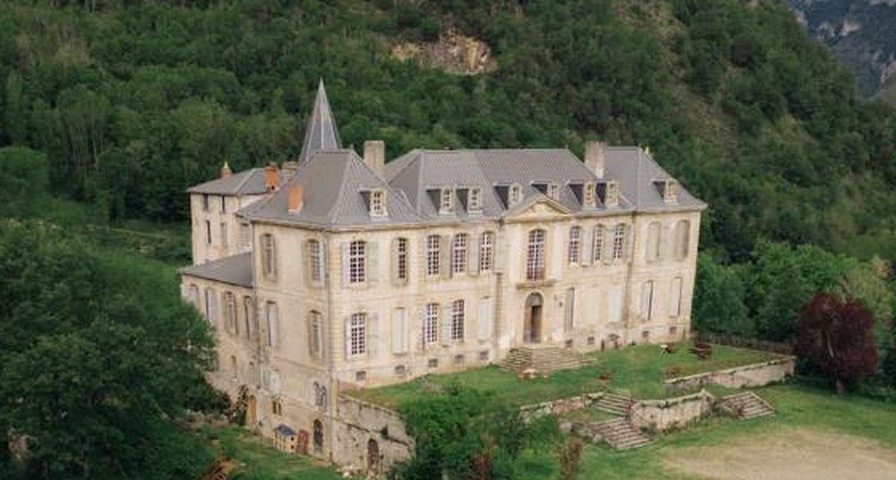
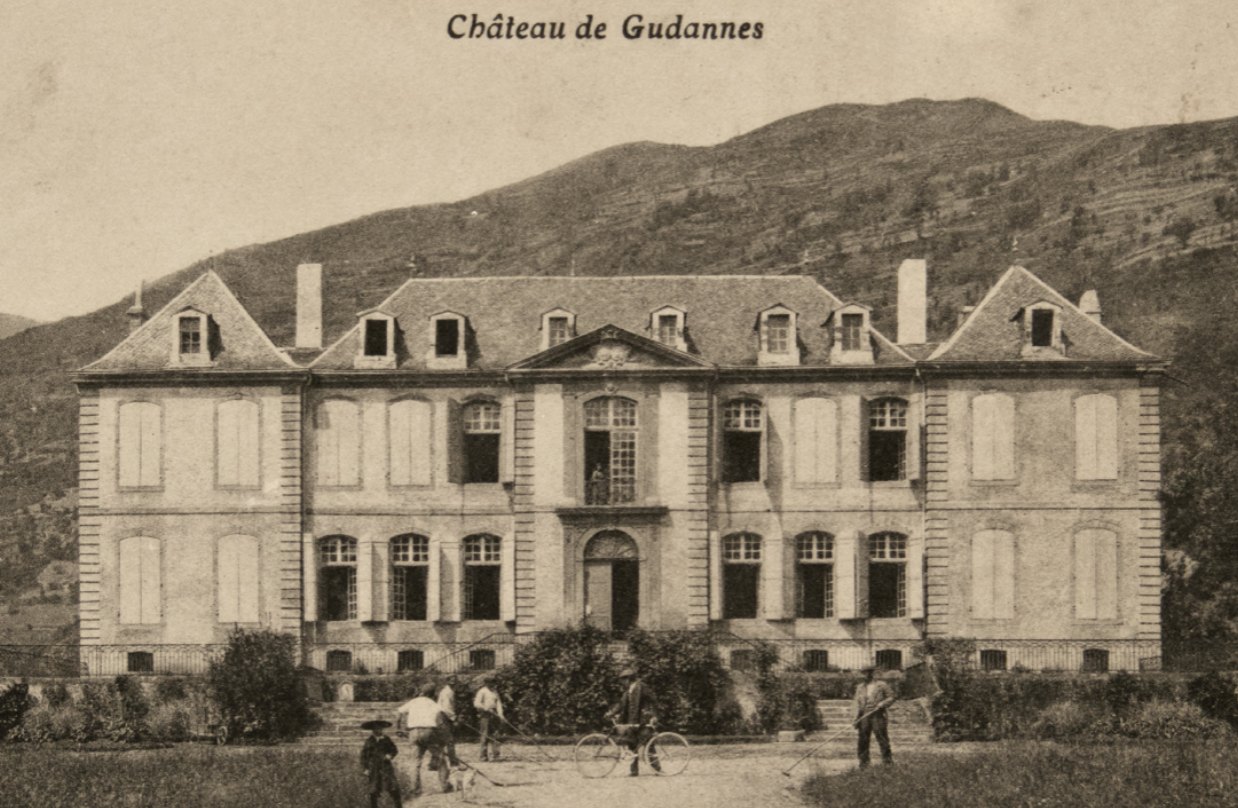
Monument Historique Classé · Built 1741
Under Restoration Since 2013
A Class I Historic Monument that was very nearly lost.
- 1741The château is built.
- 1994Classified a Historic Monument: classé, the highest level of protection in France.
- 2013Karina Waters buys it, and the restoration begins.
- 2014The first winter spent inside: no electricity, heating or water yet, and a tent pitched in one of the rooms against the cold.
- 2016The restoration receives the Medal of Honour of the Fondation Prince Louis de Polignac, presented by Prince Albert II of Monaco.
- 2020Work begins on bringing back the gardens.
- NowA Class I Historic Monument under restoration, with five bedrooms open to guests, and the workshops.
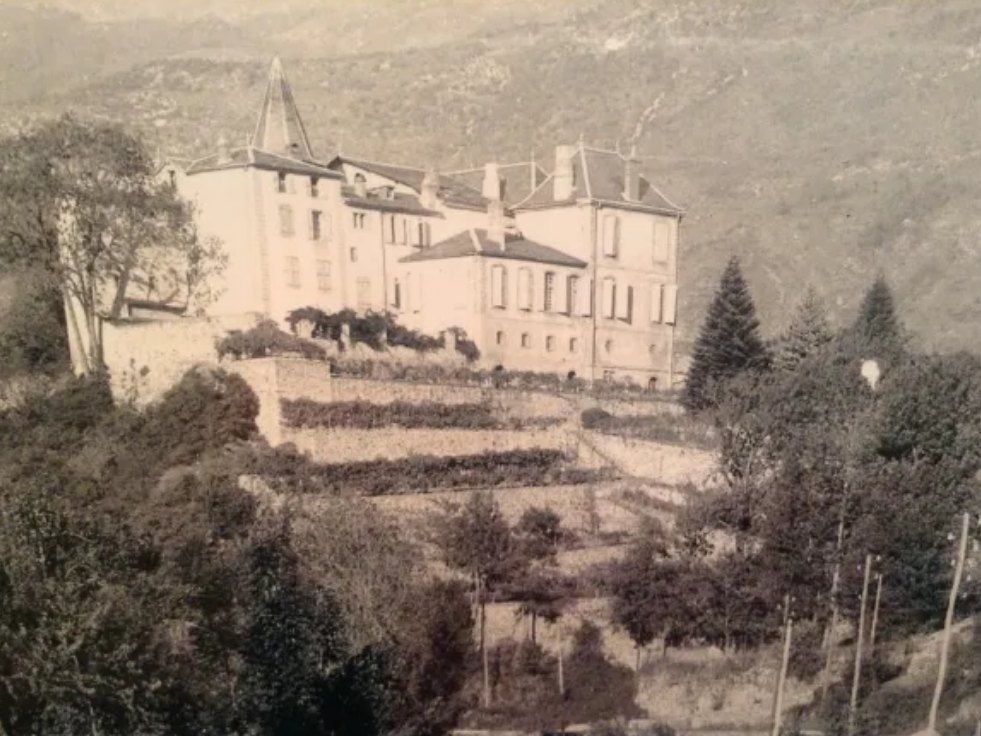
Autrefois As it was
As It Was
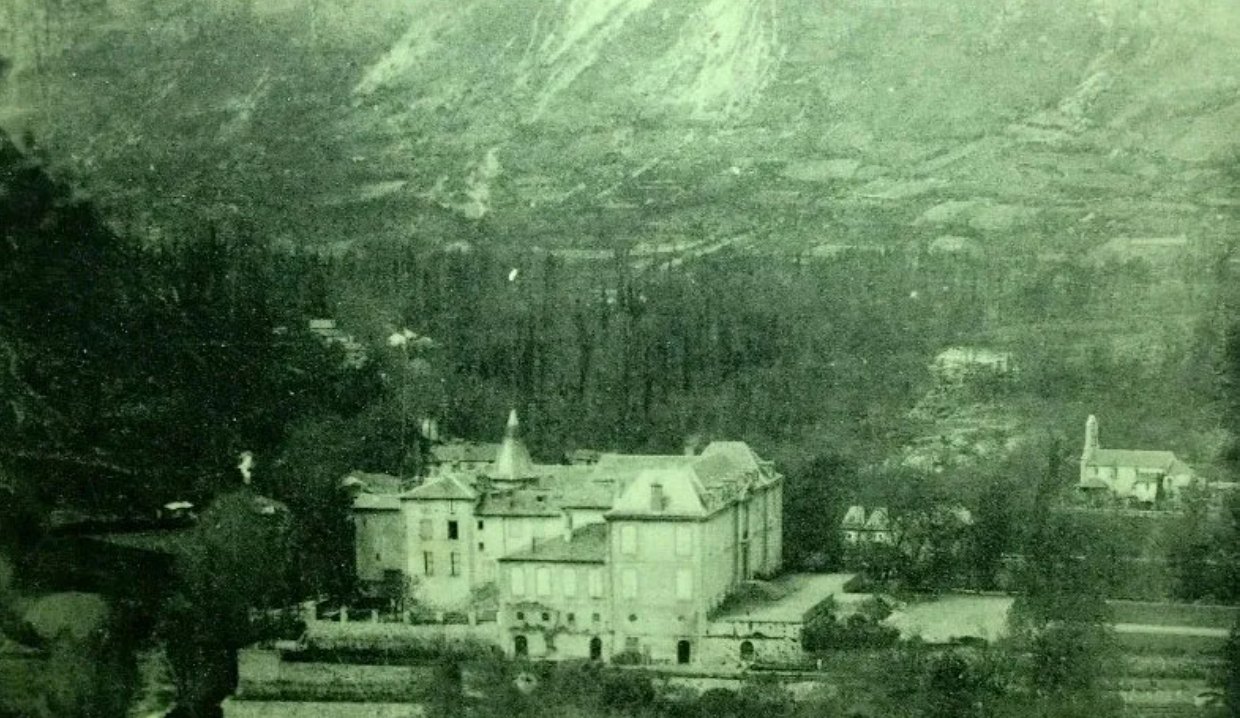
Tel que trouvé As we found it
As We Found It
The château was classified as a ruin when the family bought it. Roofs open to the sky, floors fallen through, rooms left to the rain and the moss: this is where the restoration began.
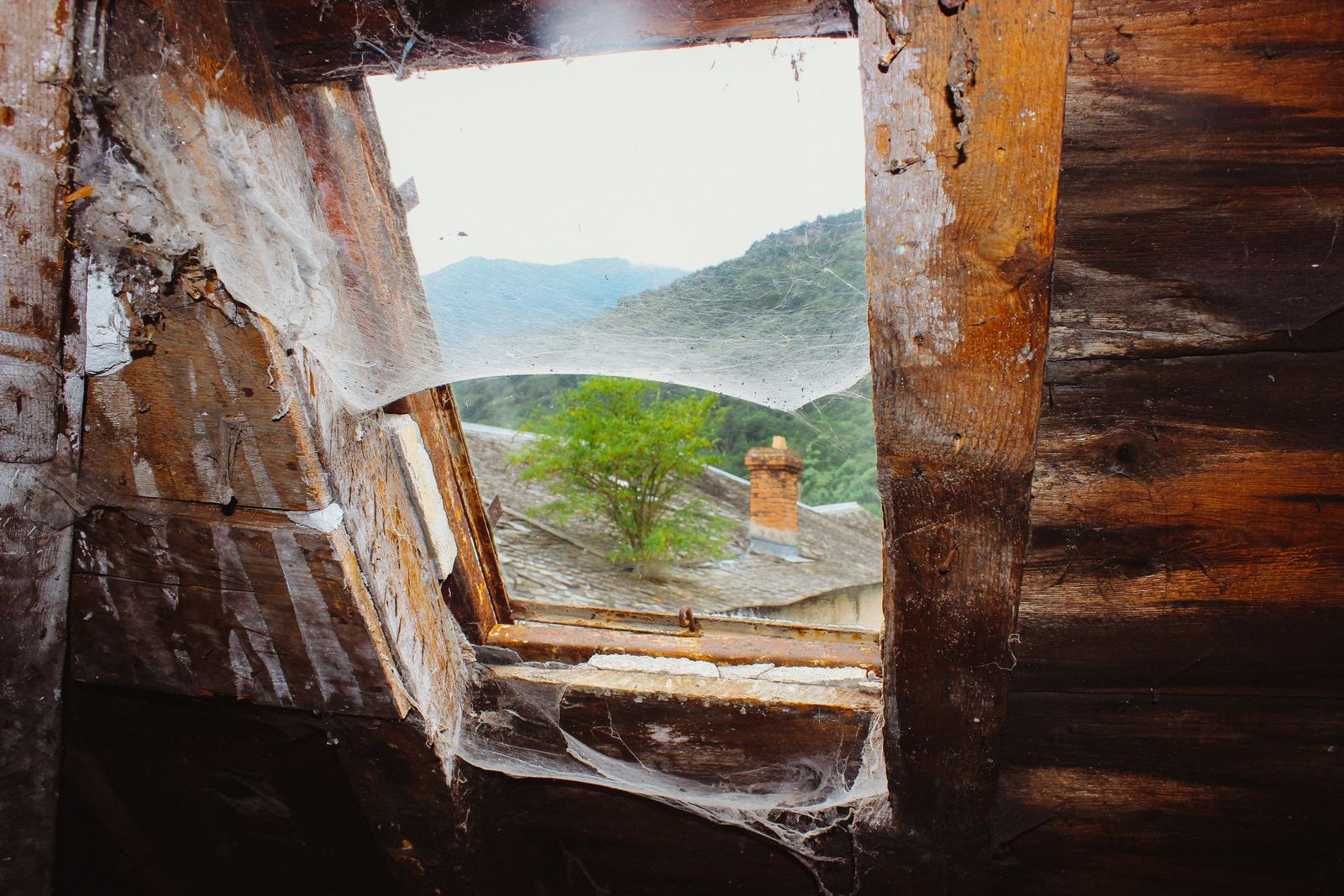
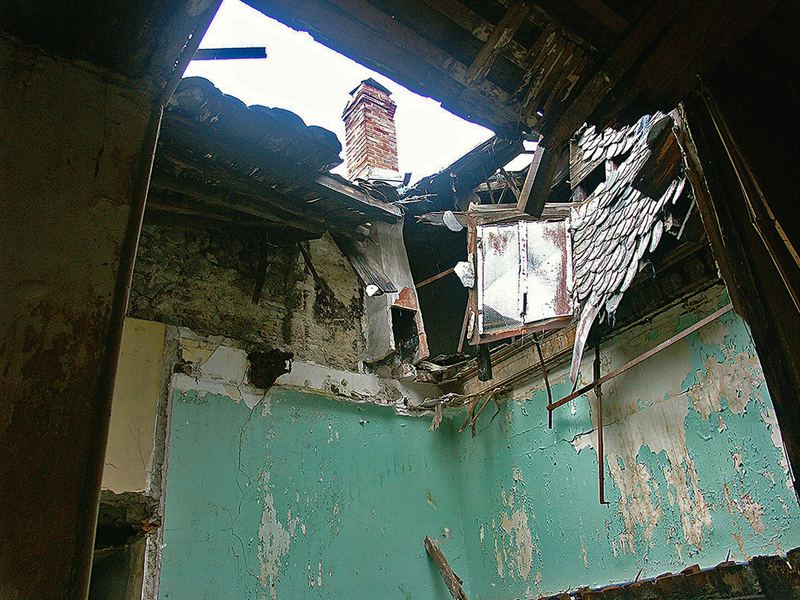
The roof, open to the sky 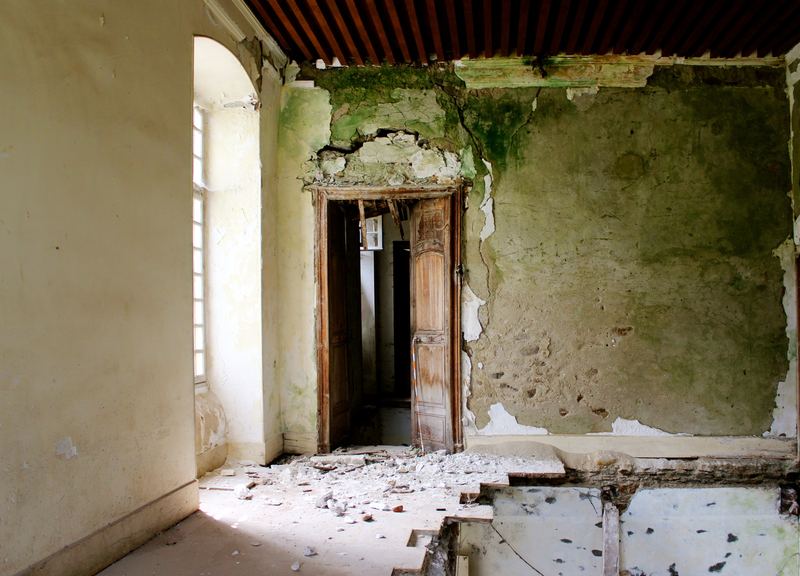
A great room, the floor open to the level below 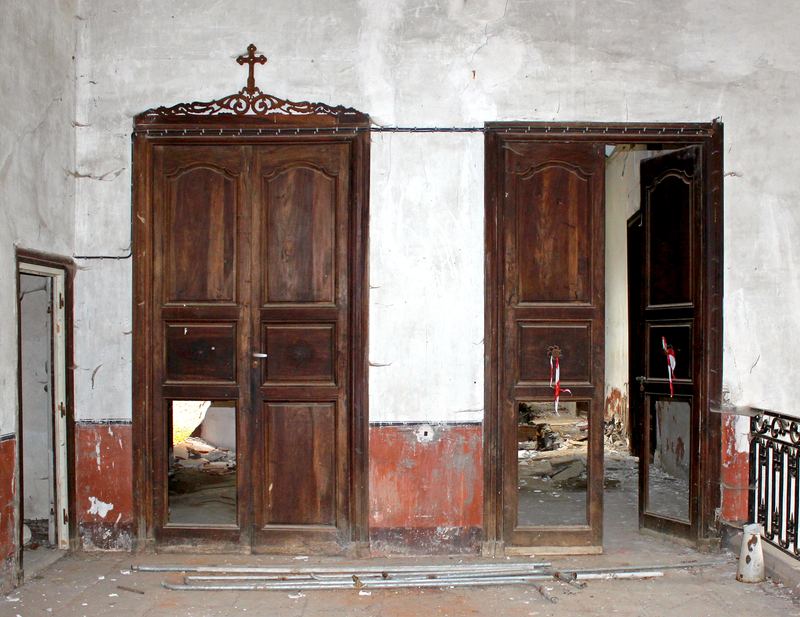
Double doors, as they were found 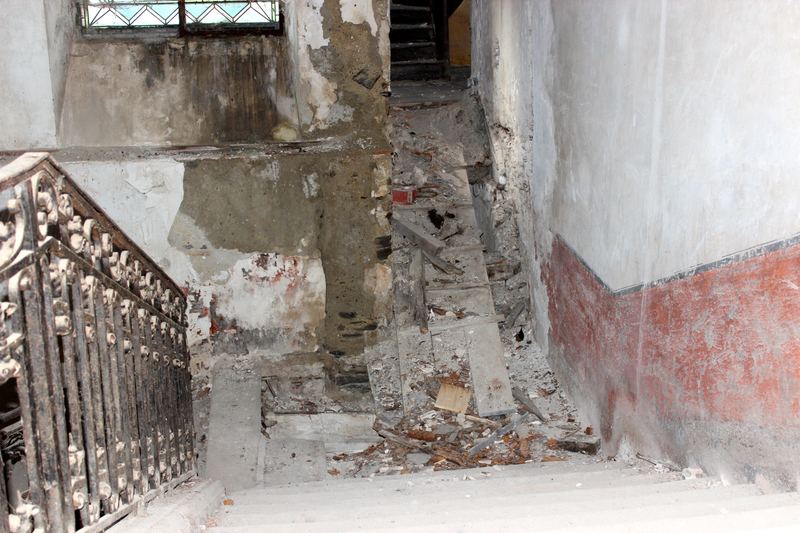
The staircase under rubble 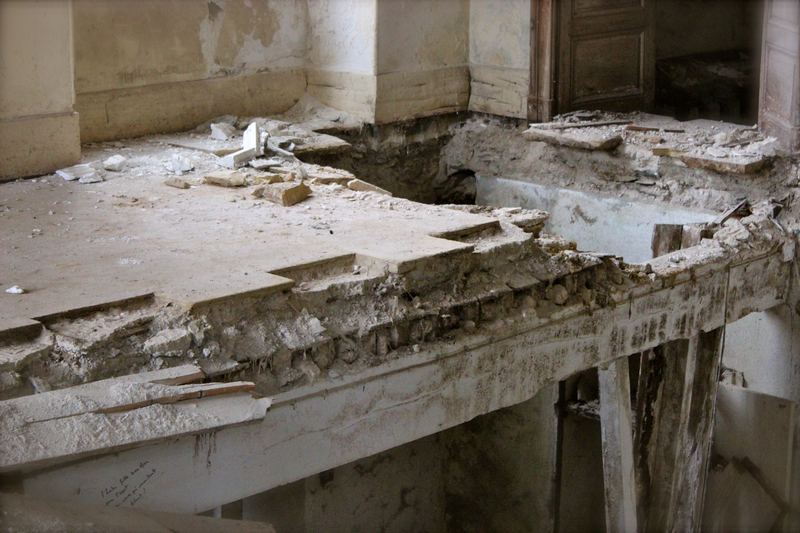
A floor fallen through to the room below 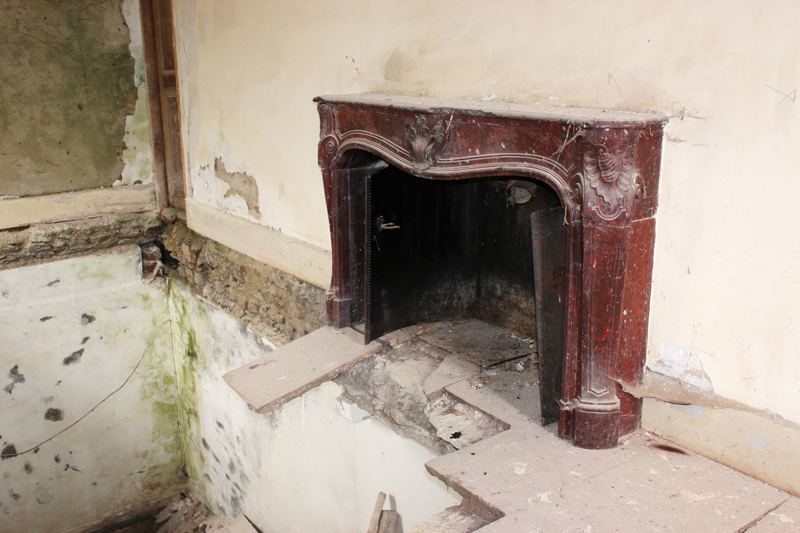
A marble mantel, the floor gone beneath it 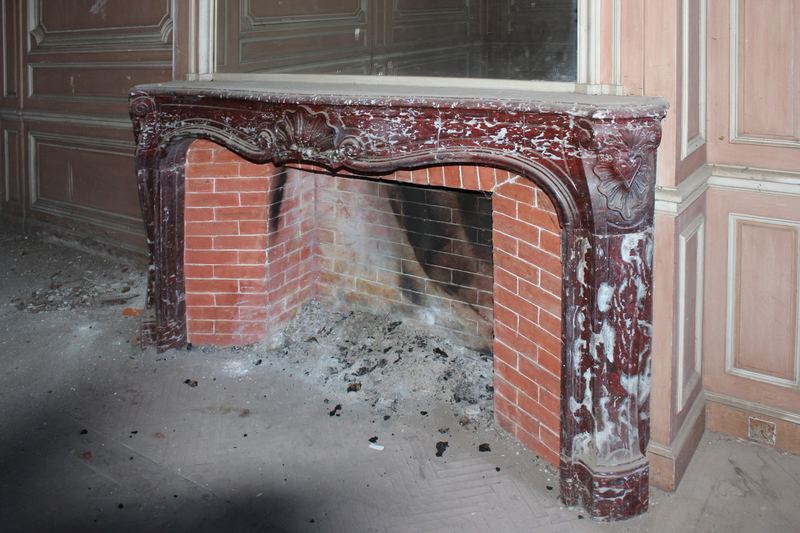
A marble fireplace in a panelled room 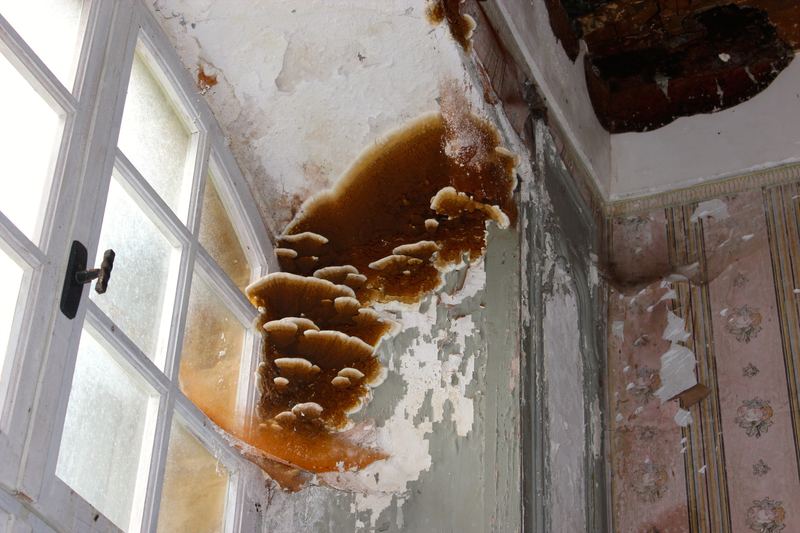
Fungus on a wall left to the damp 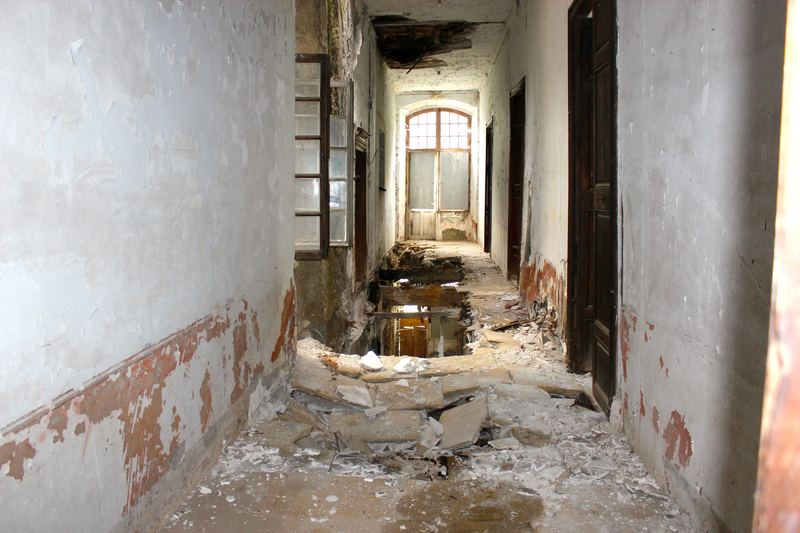
A long corridor, the floor giving way 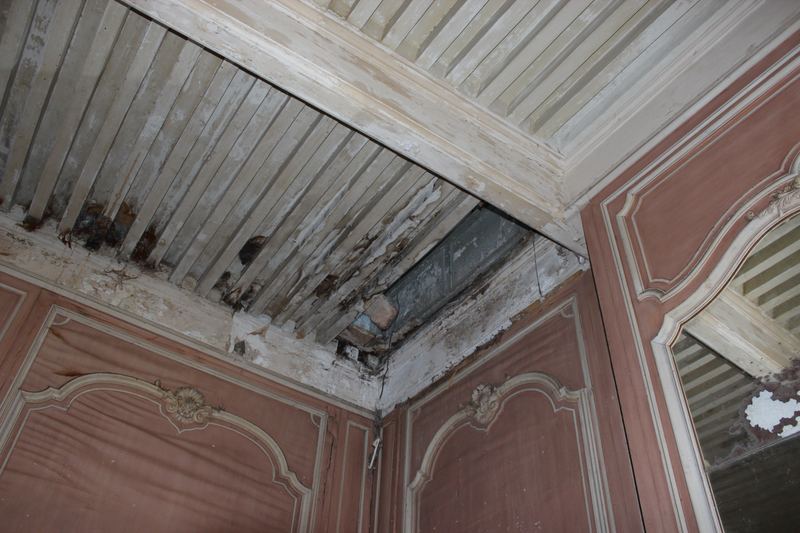
Painted panelling, the ceiling stripped above it 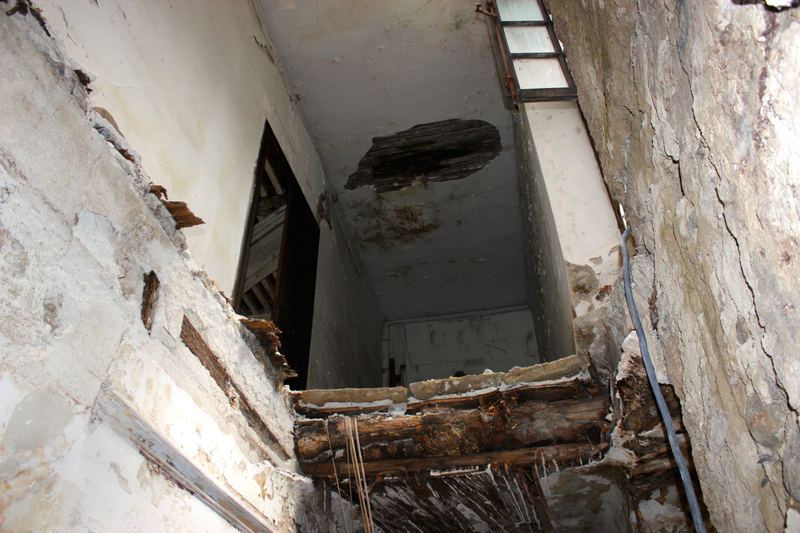
Looking up through the floors 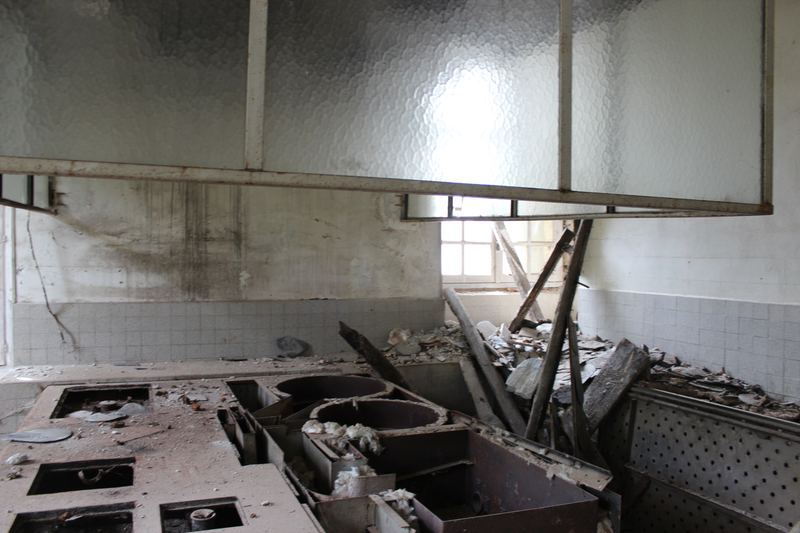
The holiday-camp kitchen, as it was left 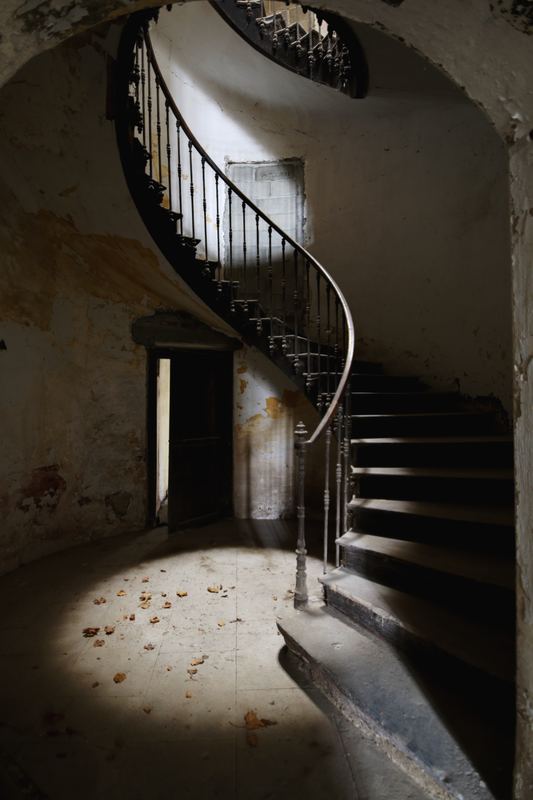
The spiral stair, going down into the dark 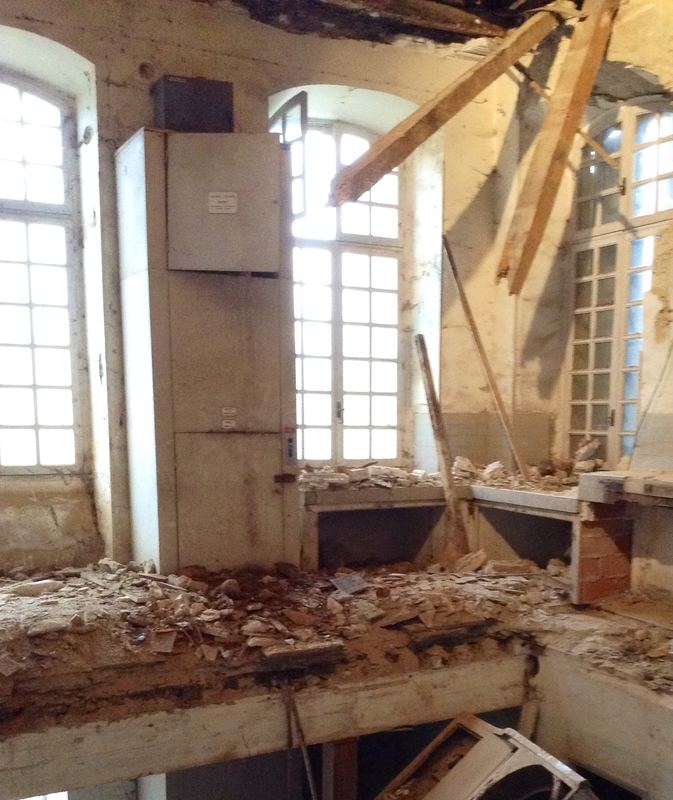
A collapsed floor beneath a tall window 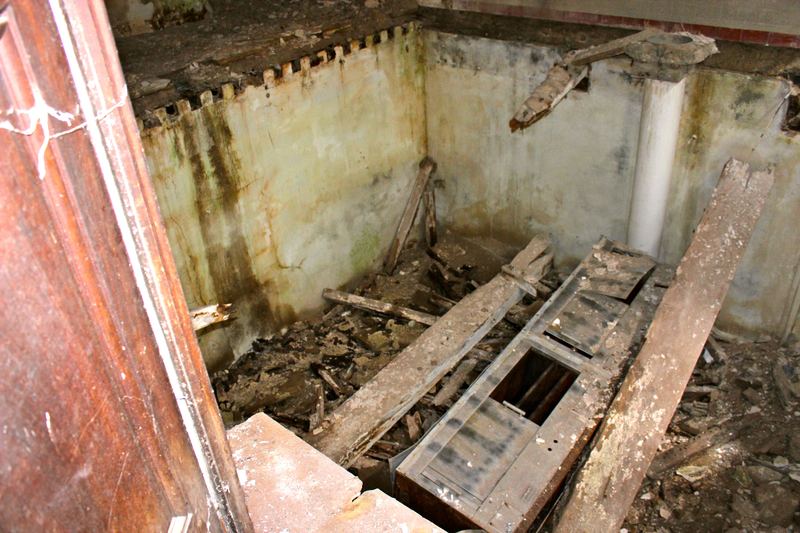
A room with no floor left
Restaurer, pas rénover Restore, not renovate
The Principle
Why the Walls Stay
A renovation makes a building new. A restoration lets it return. At Gudanes the law and the family want the same thing: the walls are kept as the centuries left them, the plaster and stone read and recorded rather than replaced, and everything new is placed within them, never over them.
So the bare walls are not unfinished work, and they are not an apology. They are the château itself, and the reason it is worth coming to. Within them, the rooms brought back have floors relaid by hand, antique French beds and new bathrooms.
La restauration, pas à pas The restoration, step by step
Restoring the Château
The restoration has been privately funded, with no grants.
-
Saving the Structure
When it was bought the château was classified as a ruin, with small trees growing from the 300-year-old slate. The first work, in 2014, was consolidation: the floors, walls and ceilings were secured before anything else, and the château was given a new roof and new windows.
-
Floors That Had Fallen
In the kitchen the whole floor had fallen through, its old ovens lying on the level below. In the dining room the stone floor was close to going, and an eighteenth-century marble mantel, its marble quarried in the neighbouring Aude, hung by a thread; beneath the stone lay chestnut beams, split logs and talc to keep out the damp. Both rooms now stand on steel and concrete, as the Historic Monuments required, hidden in the dining room by a traditional French beamed ceiling.
-
Power and Water, from the Road
All the electricity and plumbing is new: brought up from the road through a large trench, then run throughout the château, with water and waste connected to the village supply. Until it reached them, many rooms were lit by candle.
-
That First Winter
In the winter of 2014 there was still no electricity, heating or water. The first nights in the château were spent in a tent, pitched inside one of the rooms against the cold.
-
Stone, Slate and Parquet
The original eighteenth-century stone floor was lifted during the consolidation, stored, and laid again in the vestibule, and the original slate of one bedroom was kept to be used again. The rooms upstairs now have reclaimed antique Versailles parquetry.
-
Mouldings, Cast Again
In the Chambre du Parc the floors and ceilings had fallen through four levels. Every one of its original mouldings had to be cast and recreated.
-
What the Walls Gave Back
When what remained of one plaster ceiling fell, the original hand-painted Renaissance beams were found beneath it, and Renaissance frescoes under the wall plaster, among them what is believed to be the château as it once was, beside the bridge that can still be seen from the window. Wax seals from the French Revolution are still on centuries-old walnut doors, and eighteenth-century painted walls have come to light behind later panelling. In another room, cream paint came away to reveal an eighteenth-century fresco. Elsewhere were the hatches of hiding places used by a family during the Second World War.
-
Original Wallpaper, Printed Again
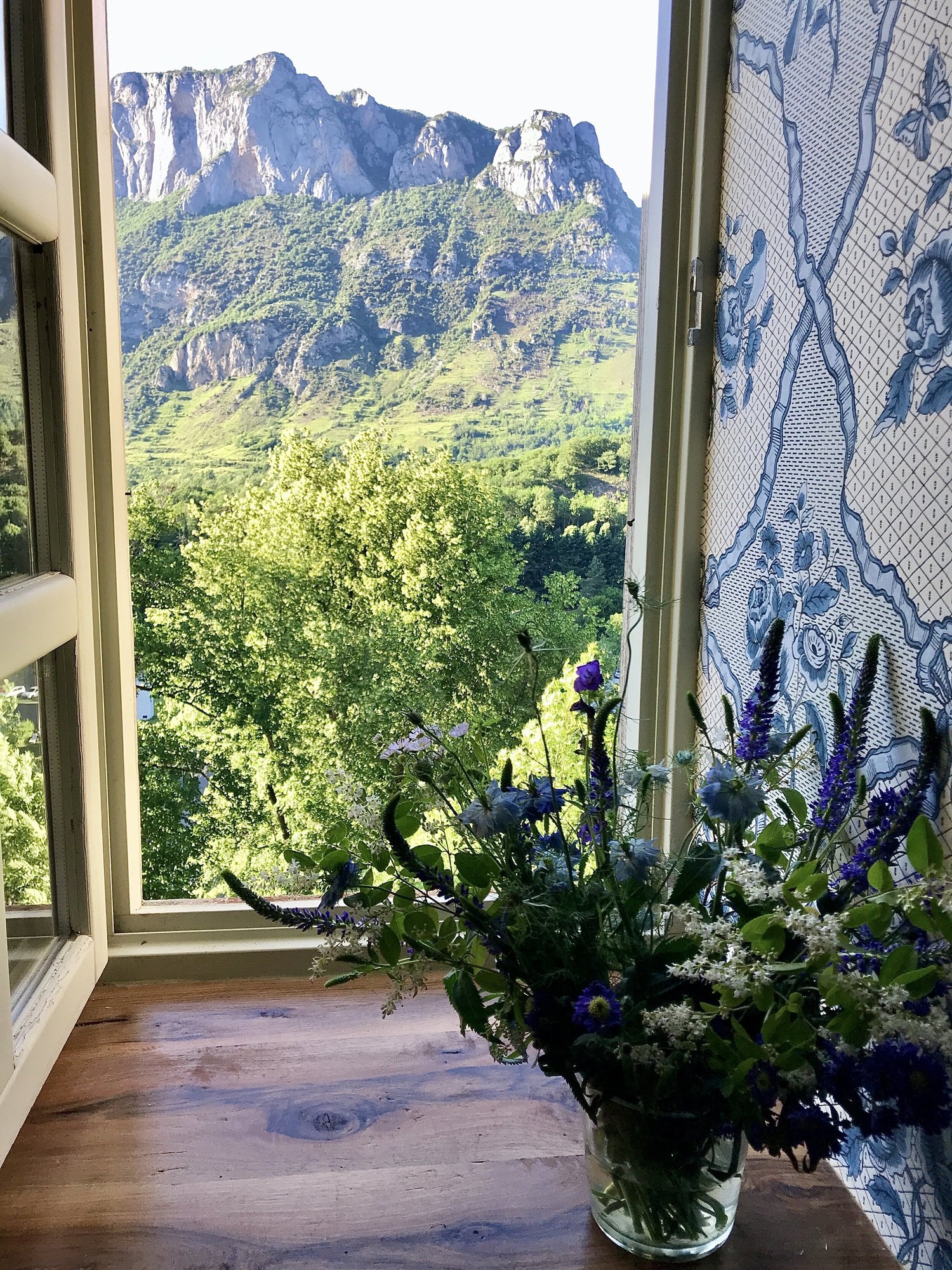
Where large pieces of the original wallpaper were lost, it has been made again. In one of the Family Suite’s bedrooms, the original paper has been printed anew by the company that first made it, from its original templates. Smaller gaps are left bare, to keep the patina.
-
Glass Restored
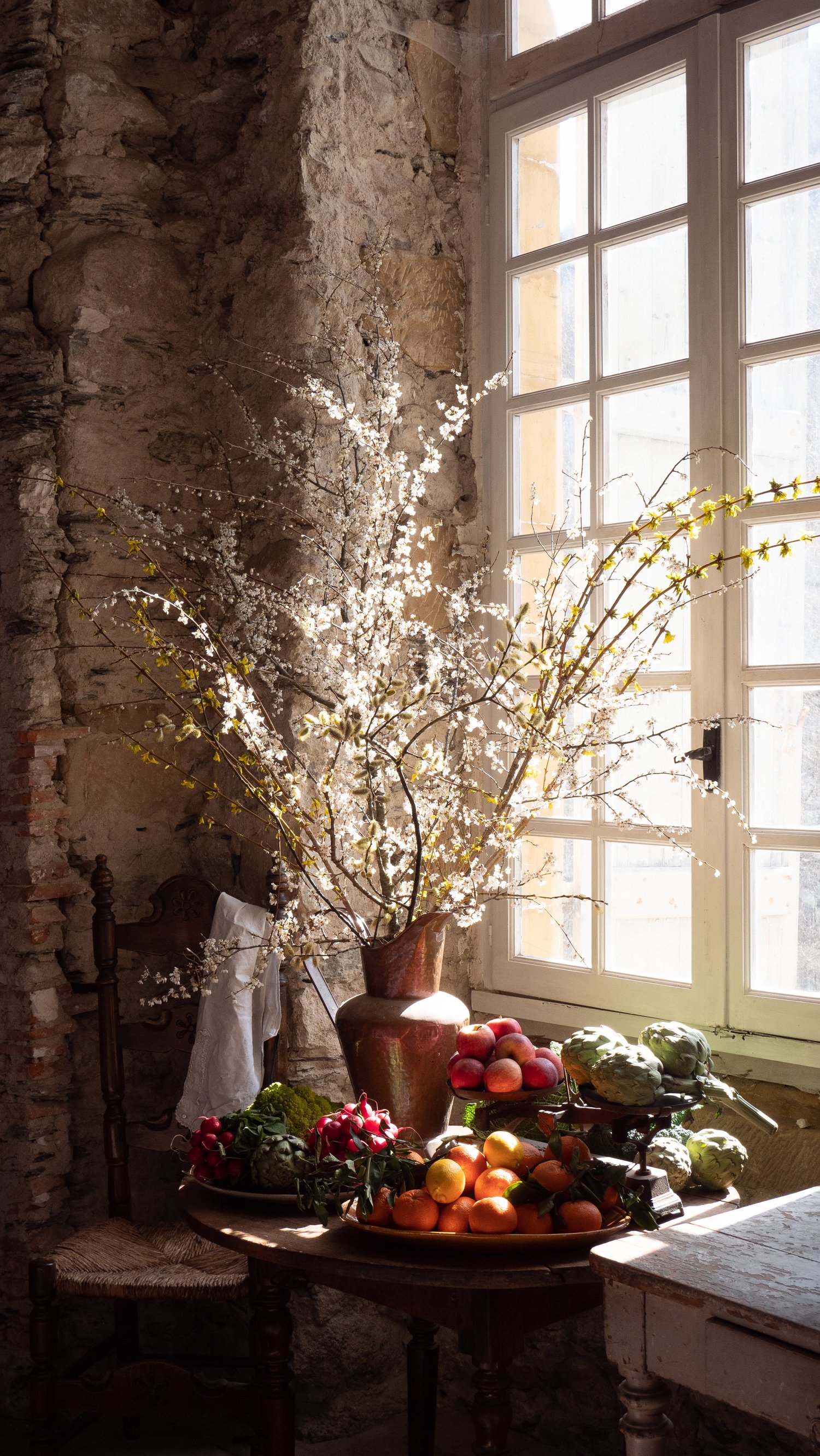
The two great windows of the vestibule have been restored by a specialist in stained glass, and the painted windows of the chapel, beneath its vaulted ceiling of gold stars on midnight blue.
-
Beneath the Château
A tunnel runs six metres underground, under a vaulted ceiling; its floor has still not been found. Local legend has an owner escaping down it in a barrel during the War of the Demoiselles, around 1830.
-
The Bathrooms, Made to Come Away
Built in 2019 in the room the 1970s holiday camp had used, where water could be brought up from the level below. A French ceiling hides the steel and concrete put in to stabilise the building, and the walls are panelled rather than touched, so that one day the bathrooms could be taken out and leave the medieval walls as they were. The doors are walnut from trees that fell in the park; the hinges and locks were saved from the rubble or found at antique markets; the floor is reclaimed eighteenth-century terracotta. The Historic Monuments service came to see them, and gave its blessing.
-
The Attics, Still Under Way
At the back of the château, in its medieval and Renaissance part, the attics are being made into rooms: new walls, doors and staircases, the plaster repaired and the beams stained. In the front, the neoclassical part, an old set of French windows was taken down and reused as the door to another attic.
-
What Could Be Saved
As much as possible has been kept and used again. Much of it was rubble, but what was found, from doorknobs to roof tiles, has been reused or kept in the cellars. A long table was made from trees the wind brought down on the grounds.
Avant, après Before and now
Then and Now
When the family came in 2013, the château had stood empty for years. Floors, walls and ceilings came first, then the slow work of bringing each room back.
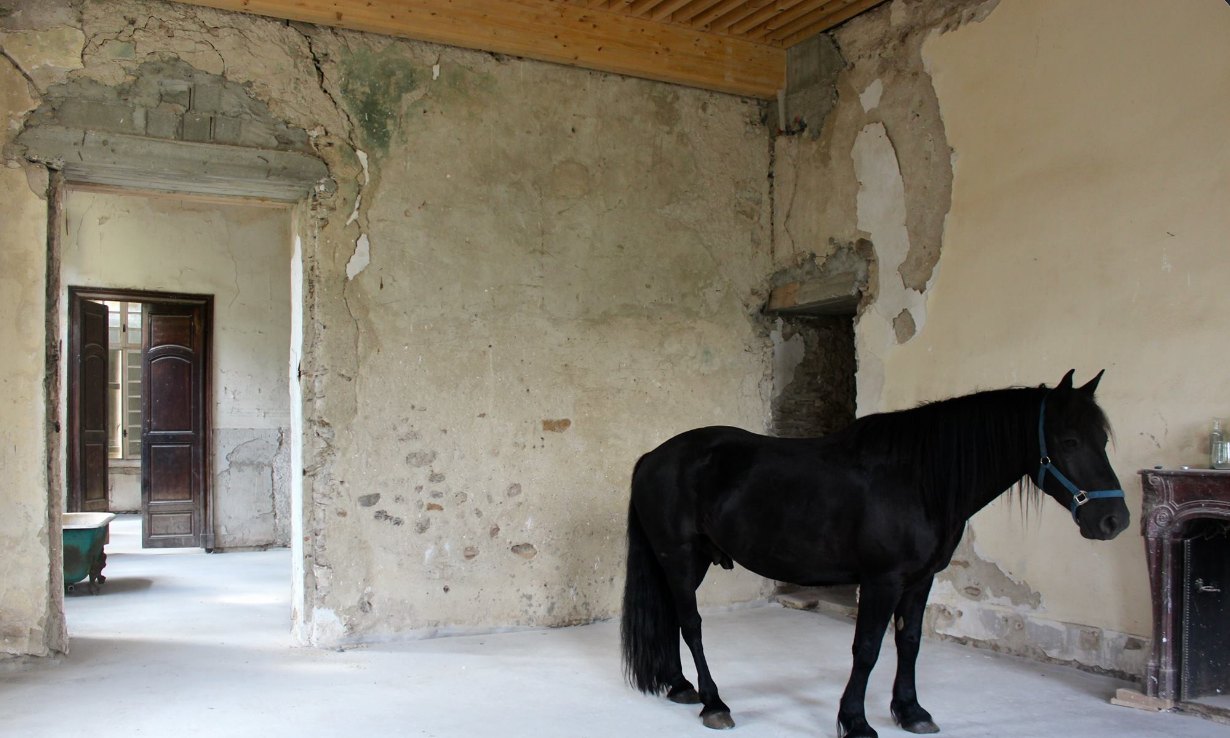 Before
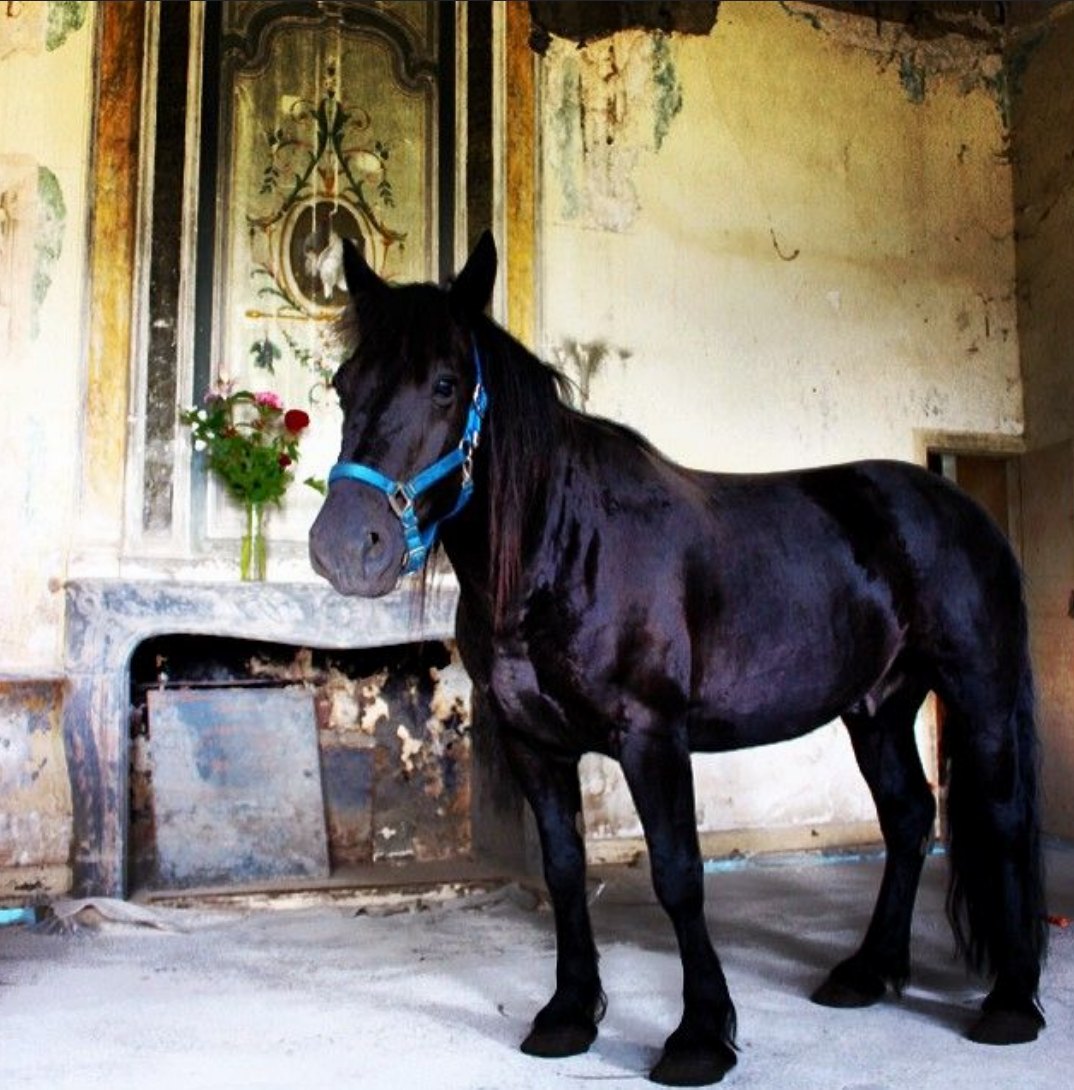 Before
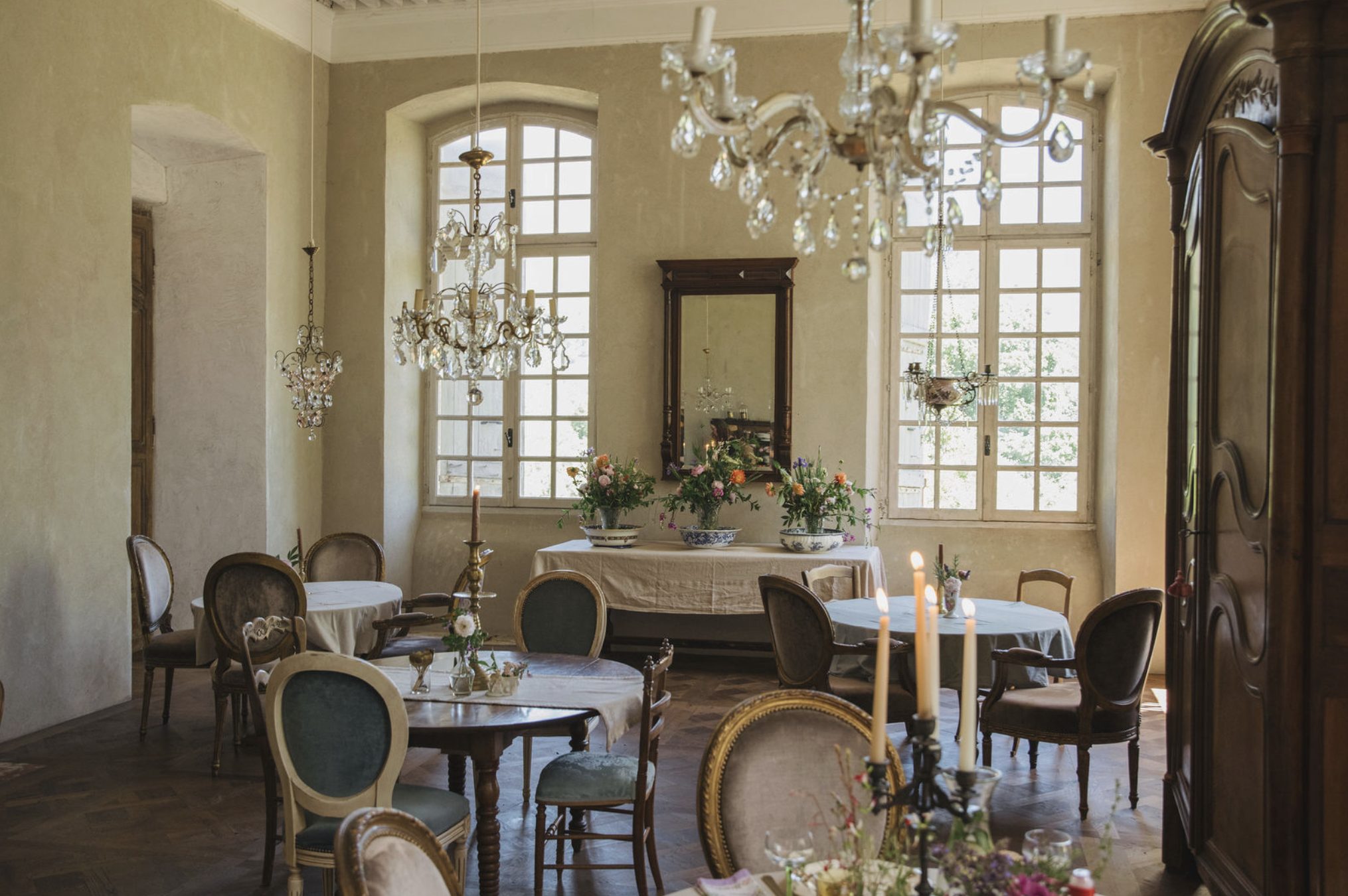 Now
NowThe dining rooms, side by side: once empty enough for a horse, now laid for dinner.
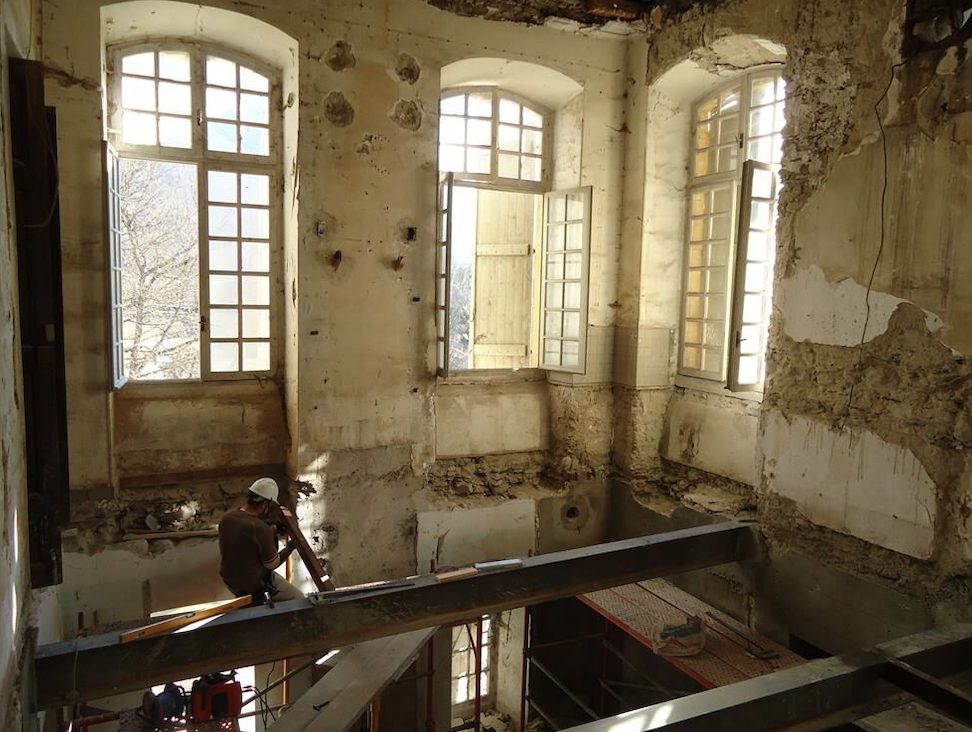 Before
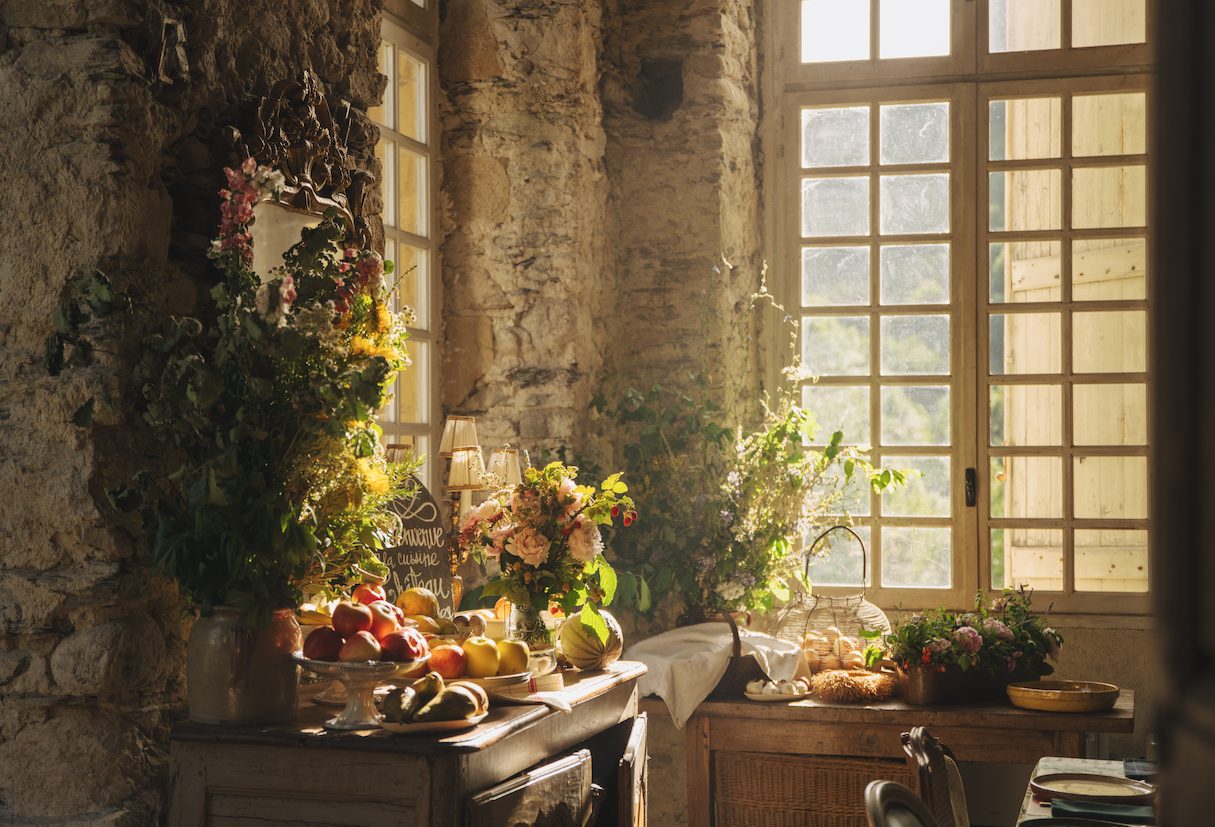 Now
NowThe kitchen
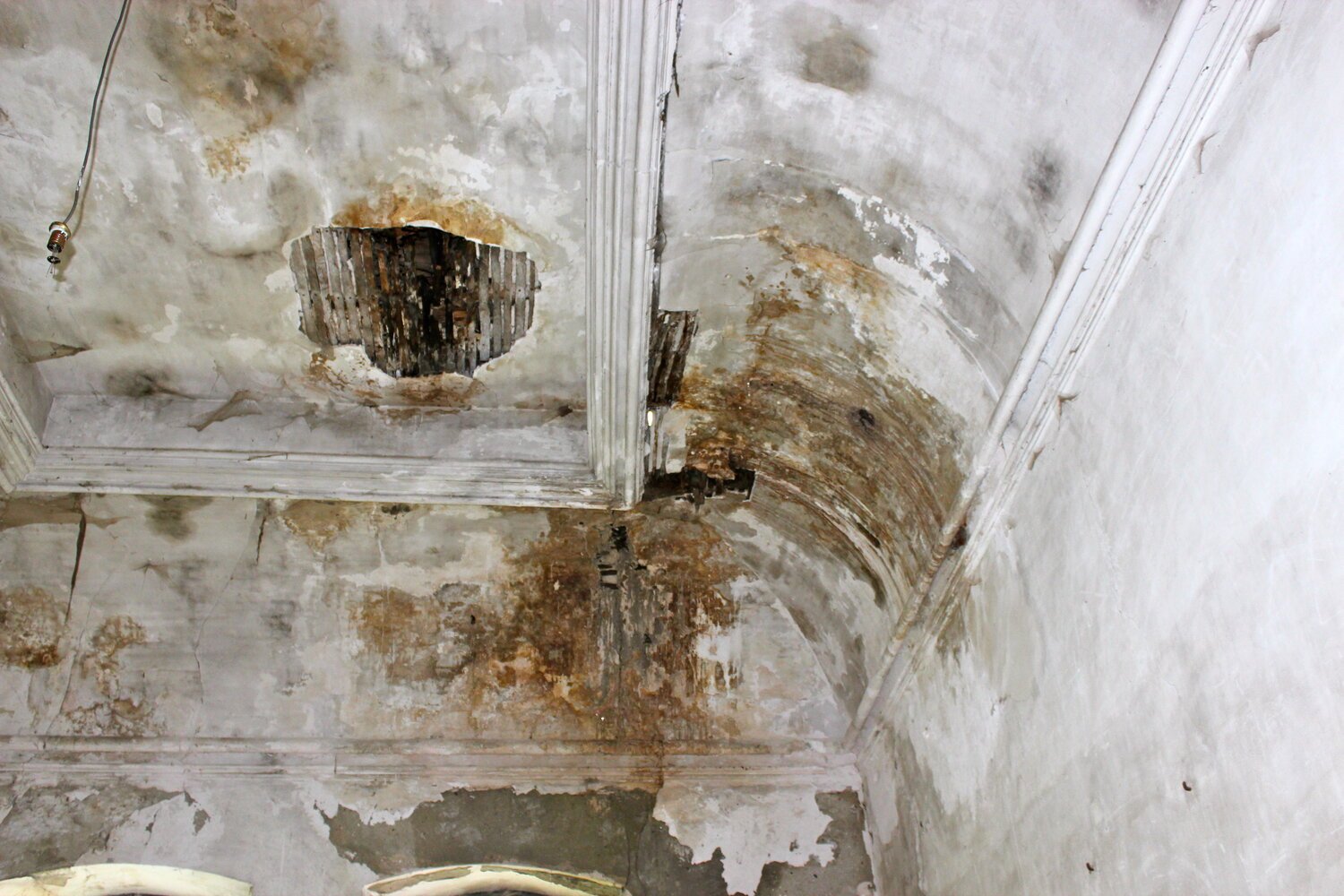 Before
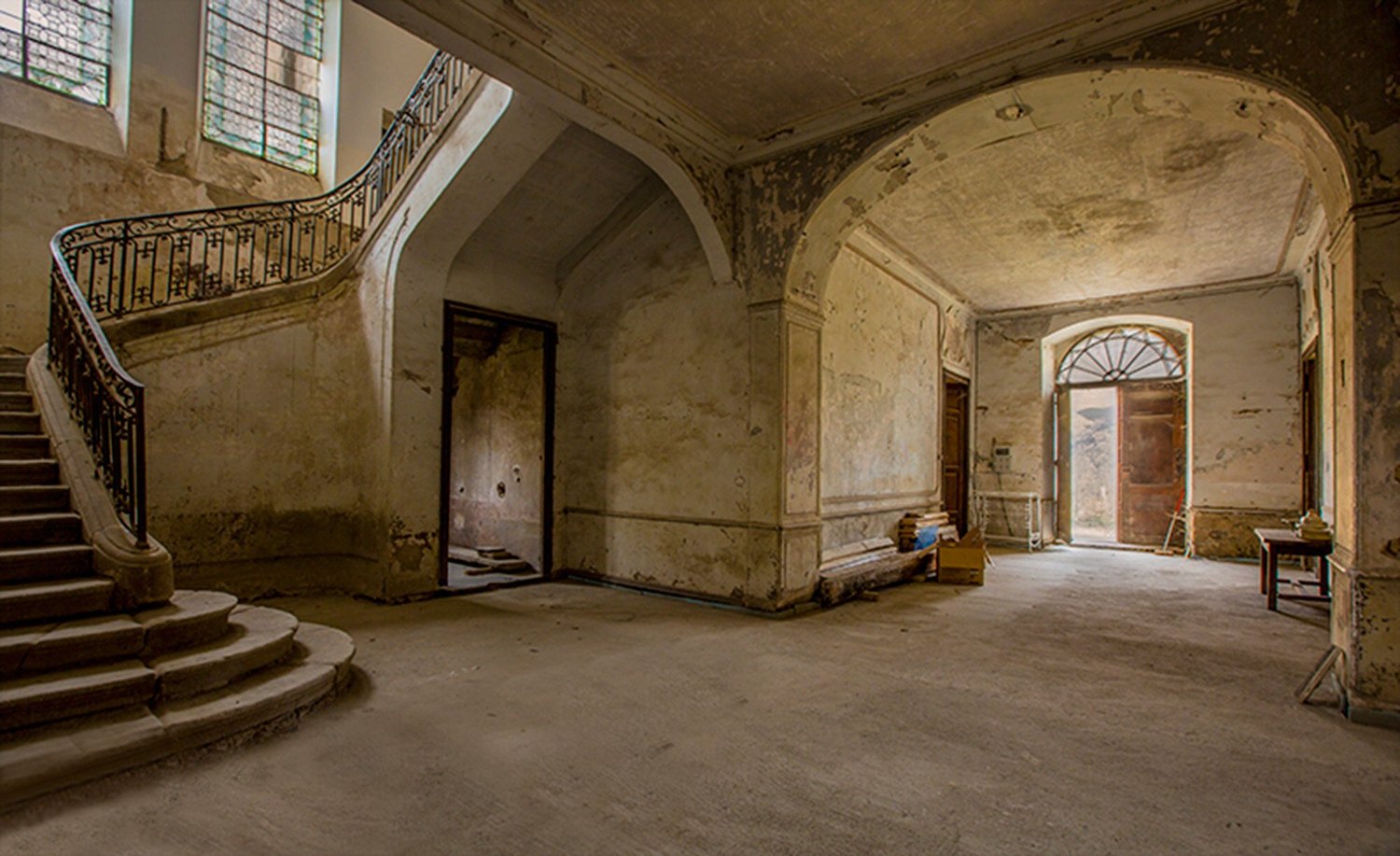 Now
NowThe vestibule
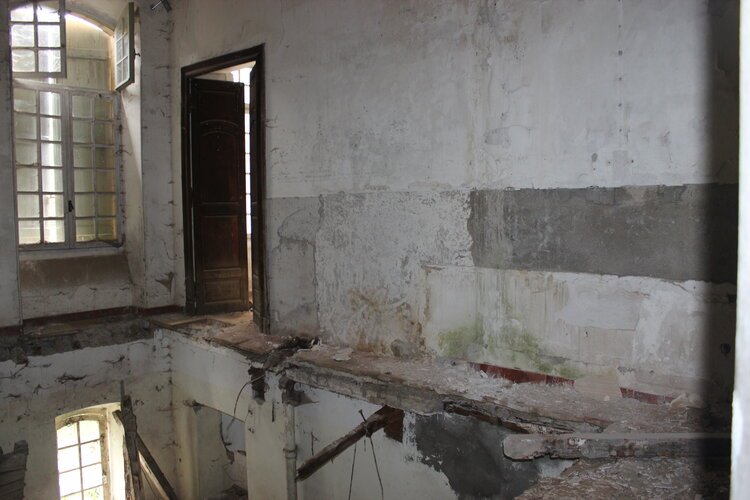 Before
 Now
NowThe bedrooms
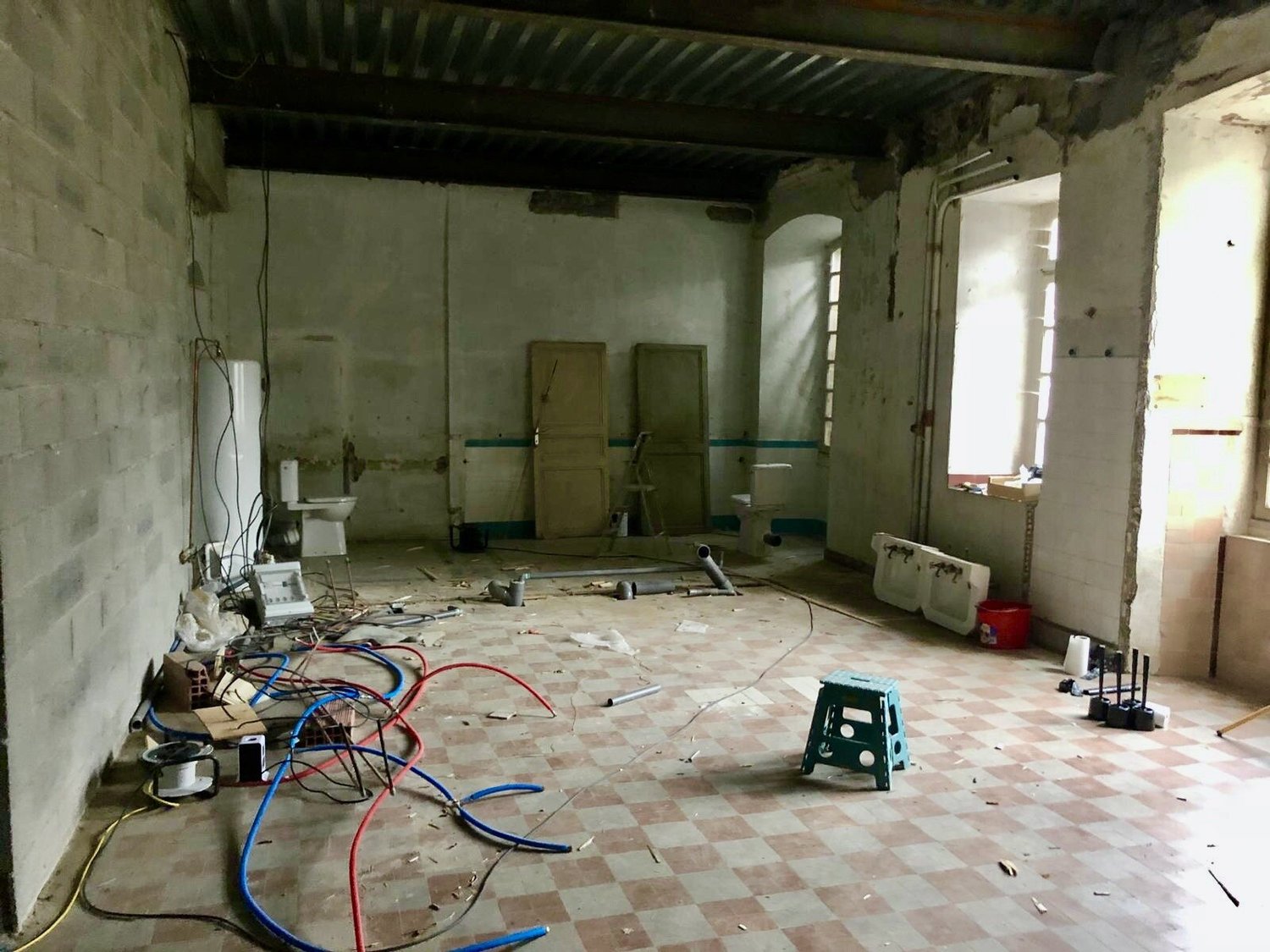 Before
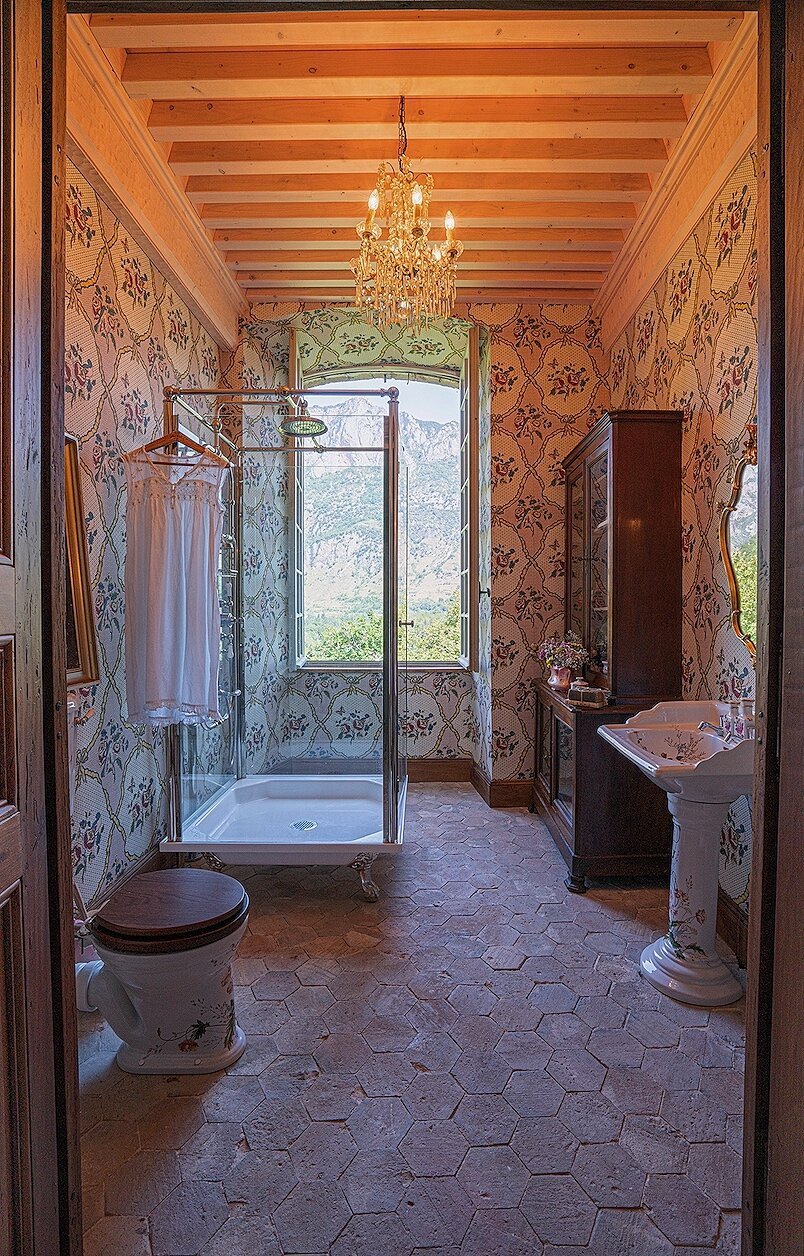 Now
NowThe bathrooms
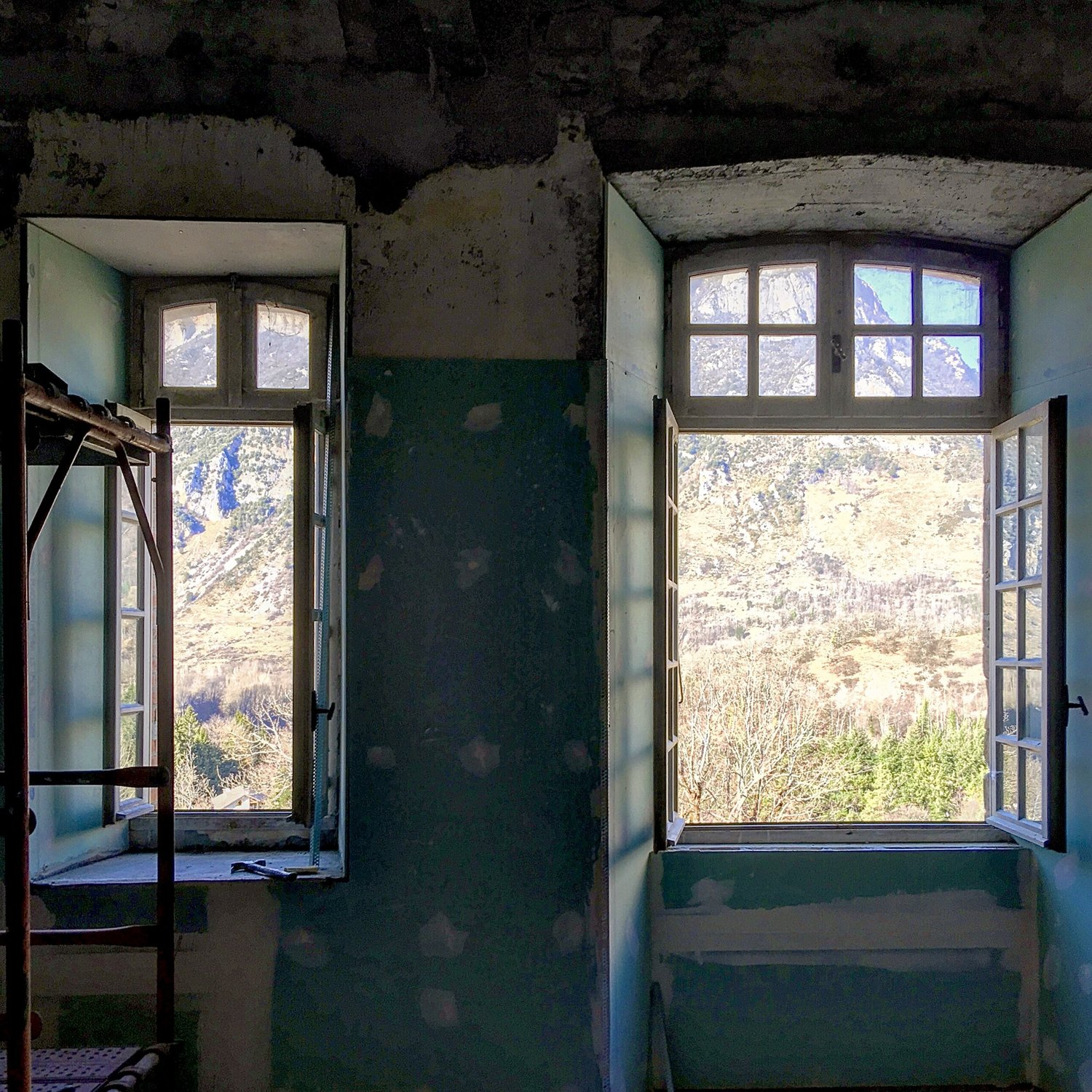 Before
 Now
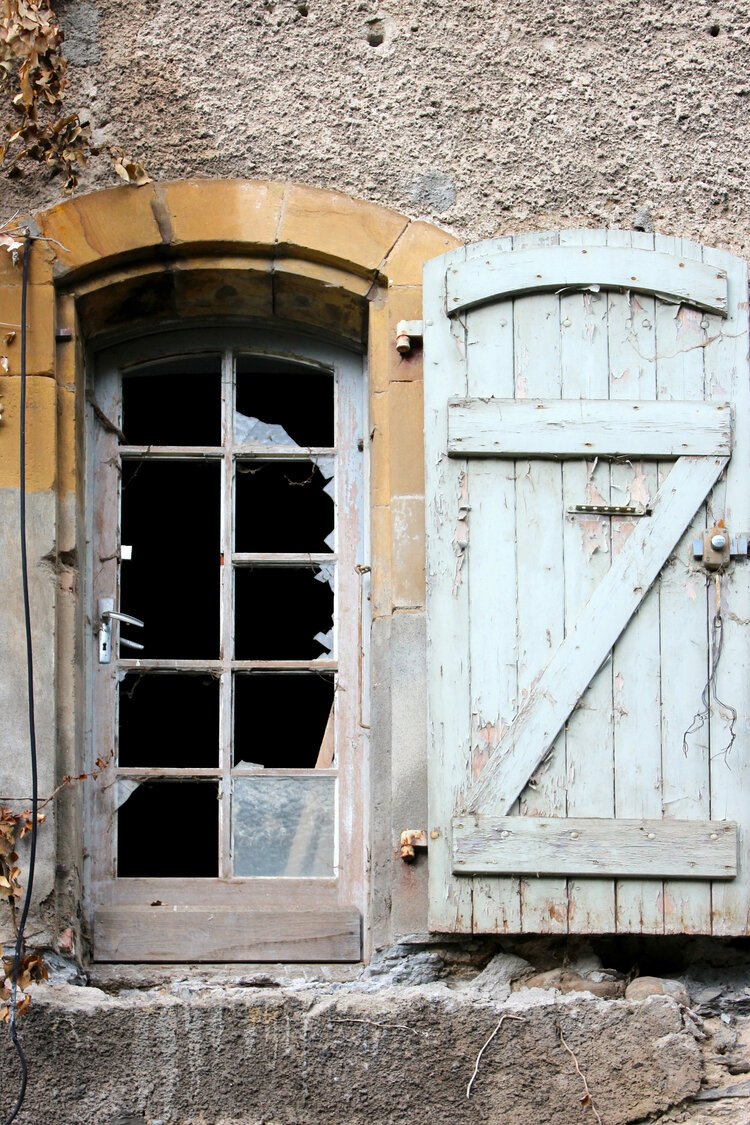
NowA bathroom window
 Before
 Now
NowThe windows
Le chantier The work
The Work, Room by Room
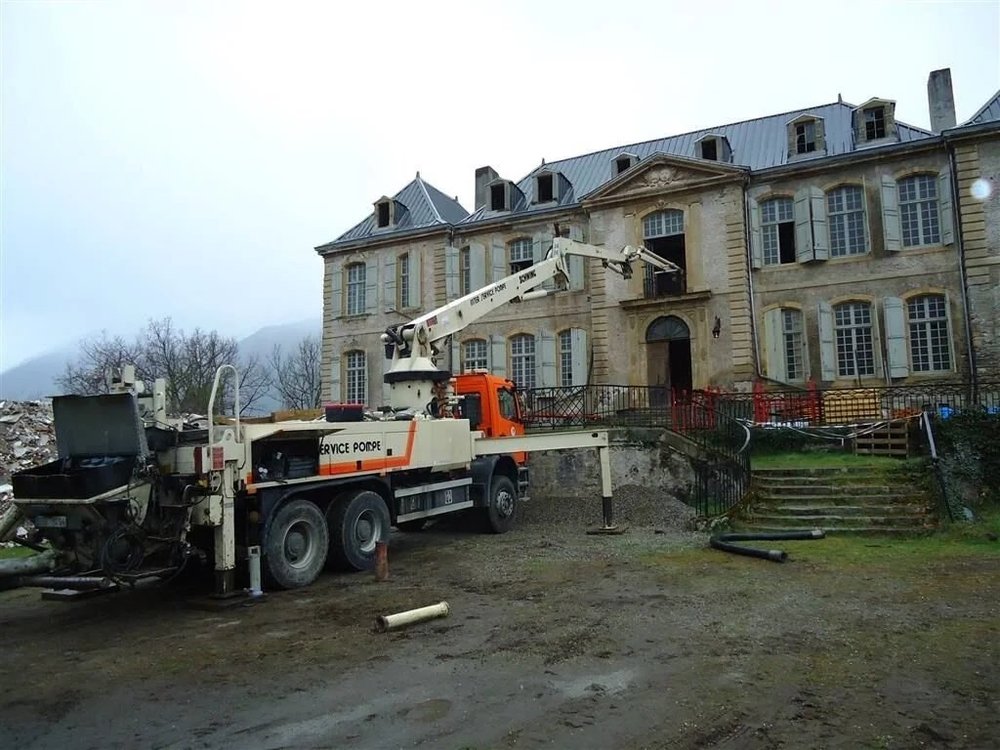
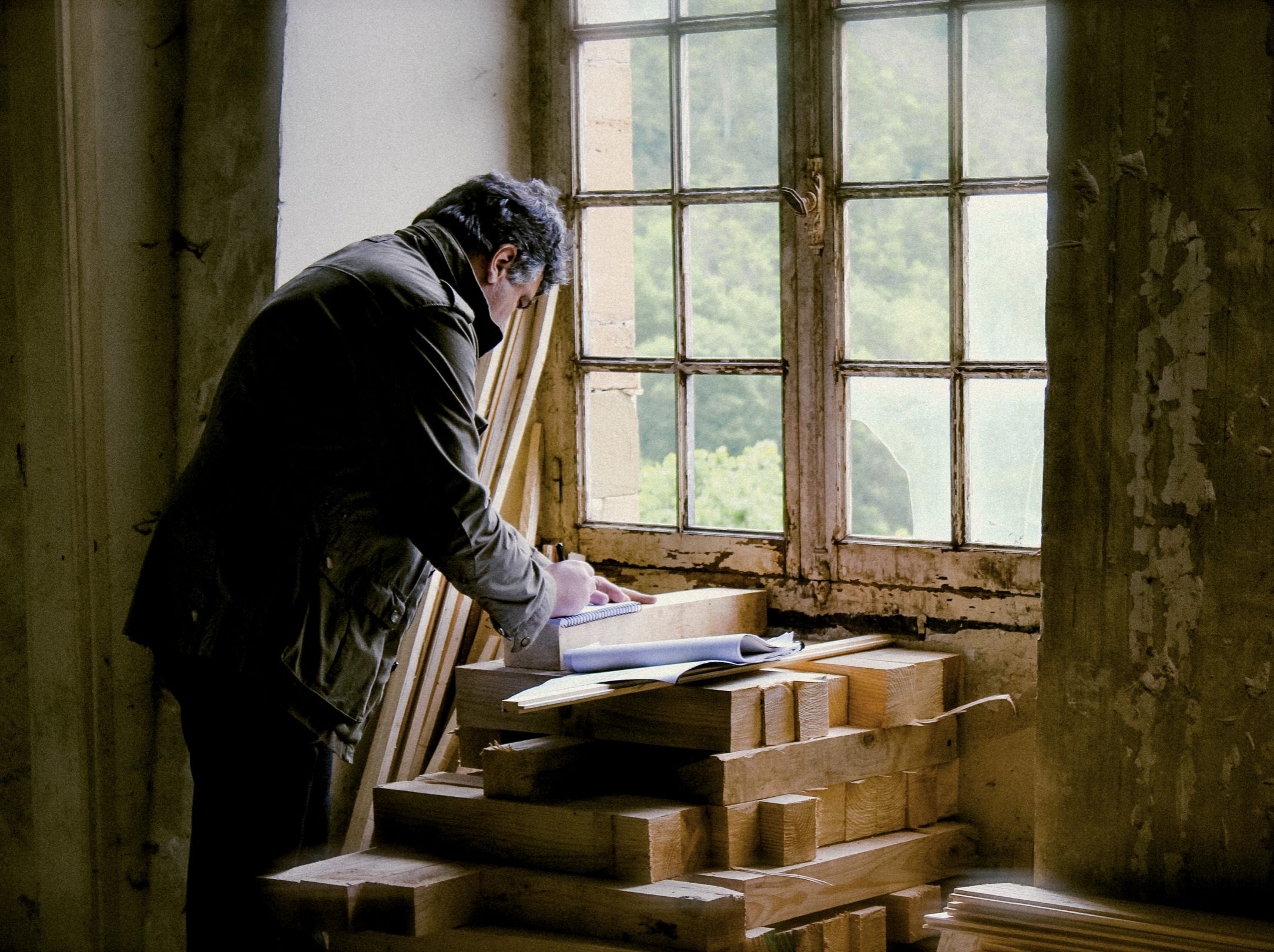
The work begins 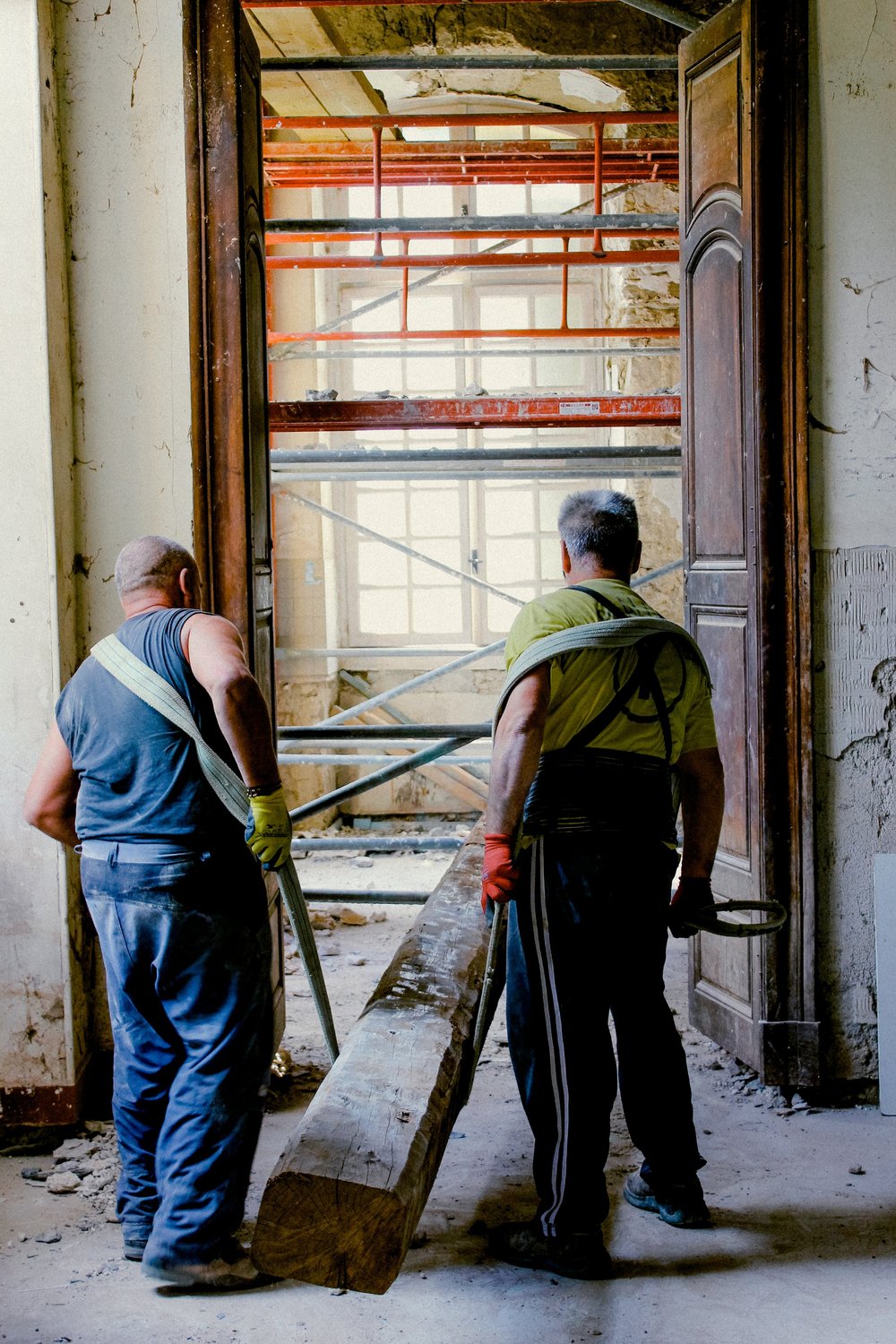
The first workers 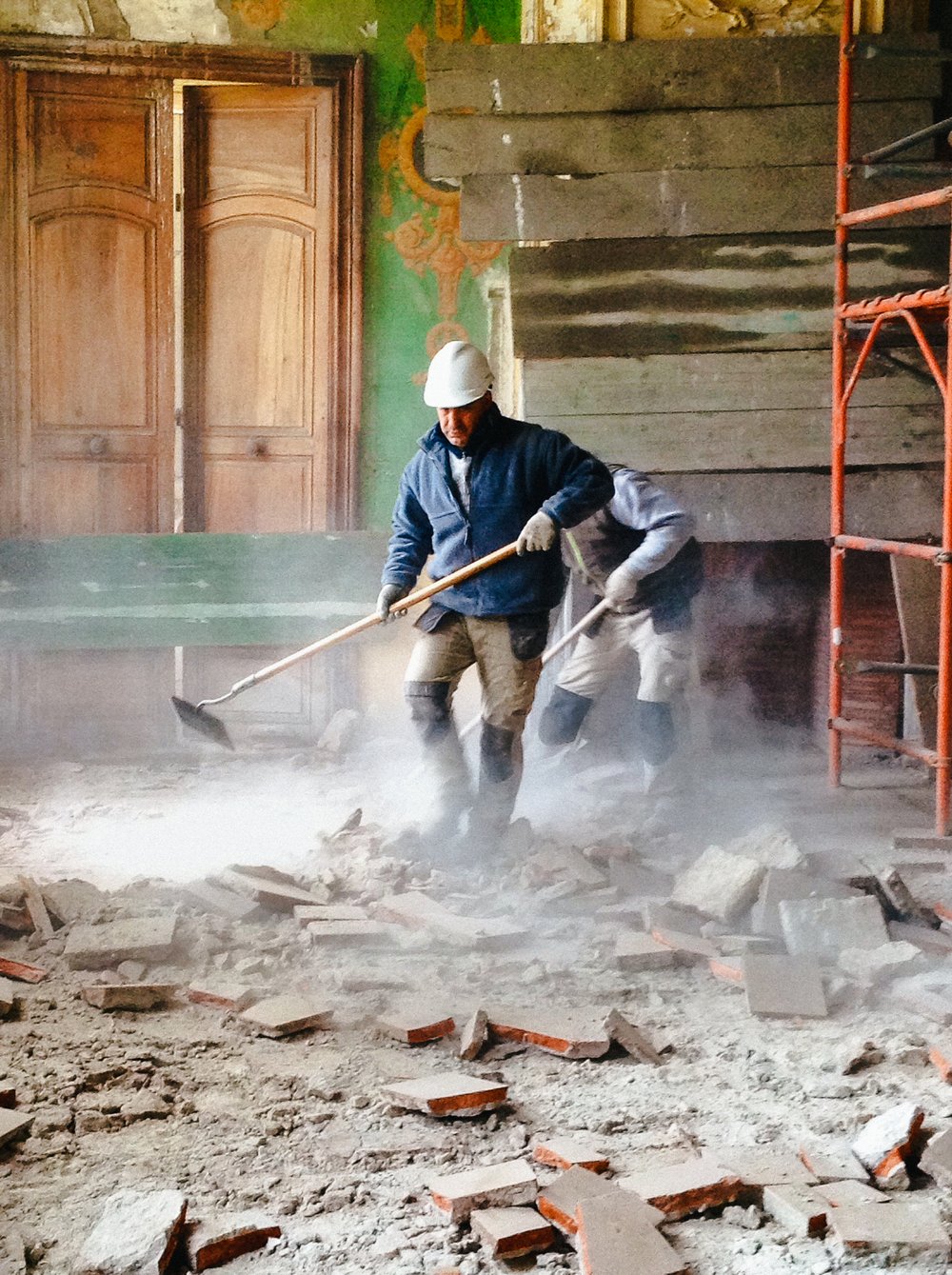
Clearing the rubble 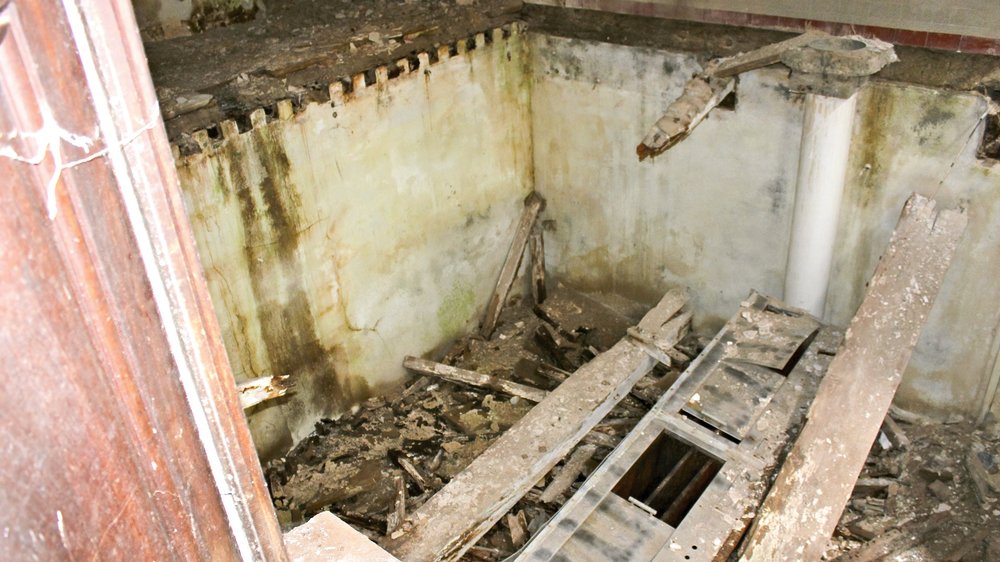
A room, the floor gone 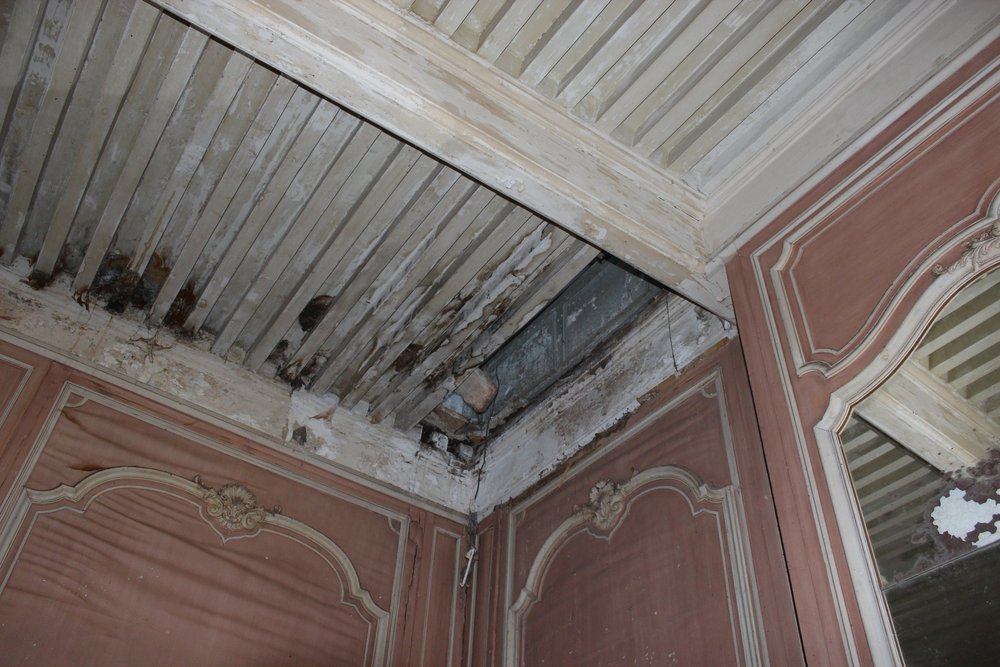
A ceiling, before 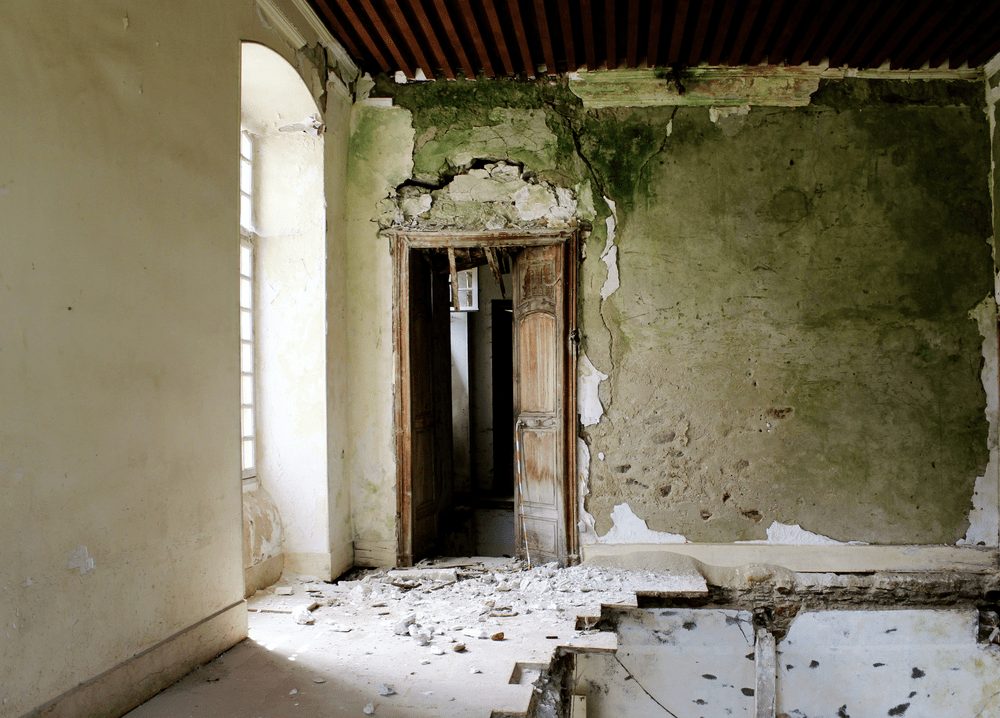
A room, before 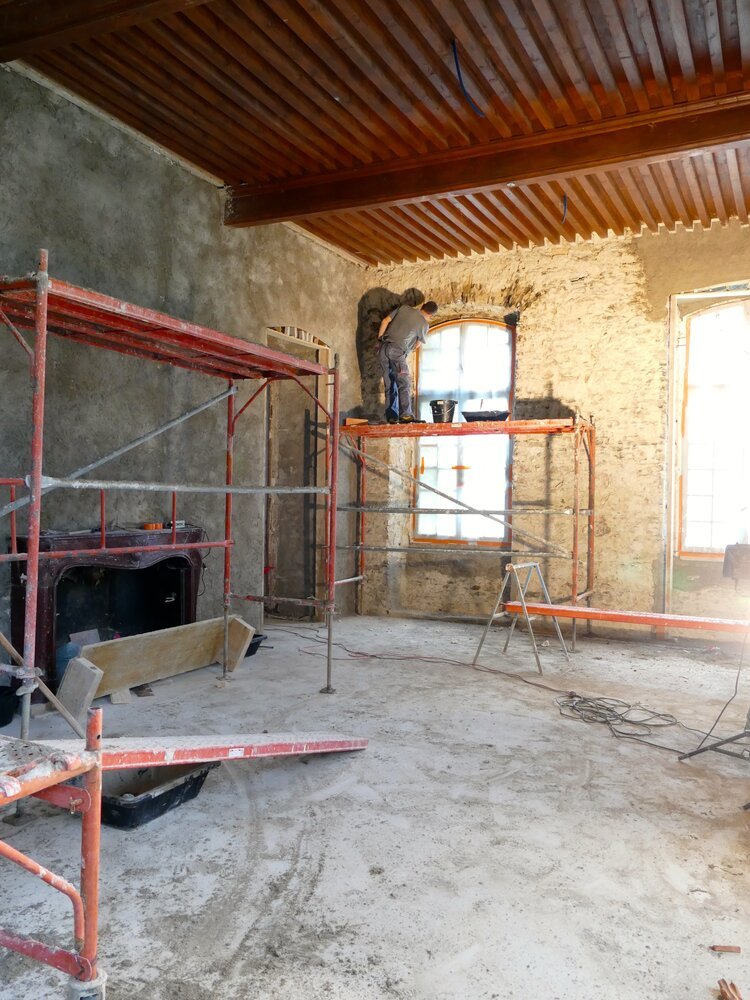
The dining room, under scaffolding 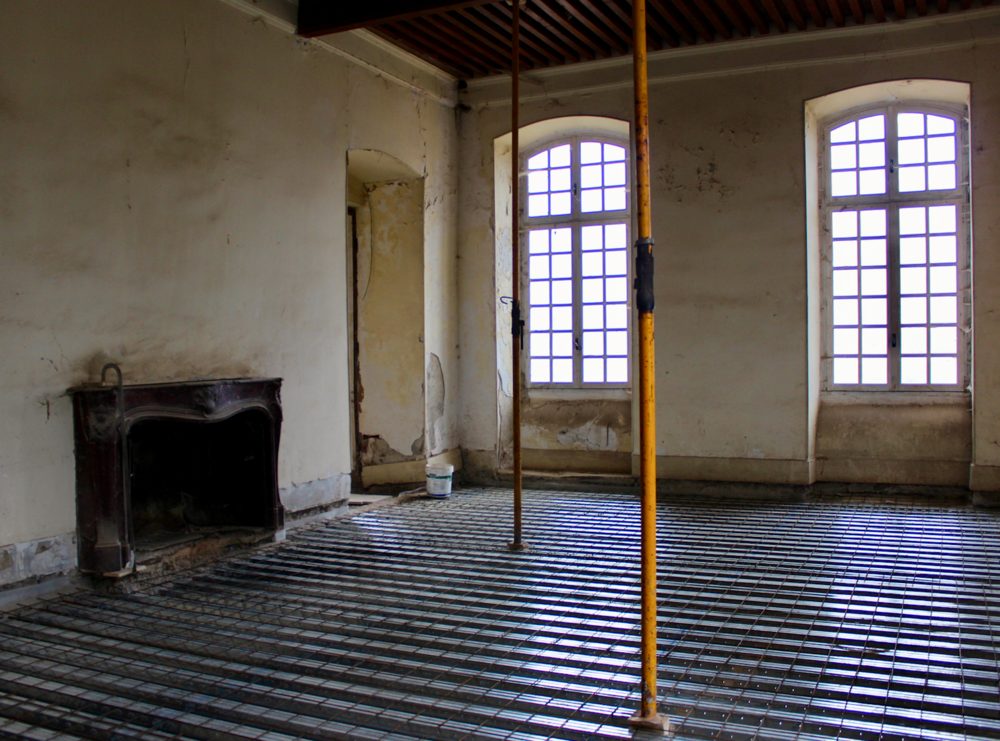
The dining room, mid-work 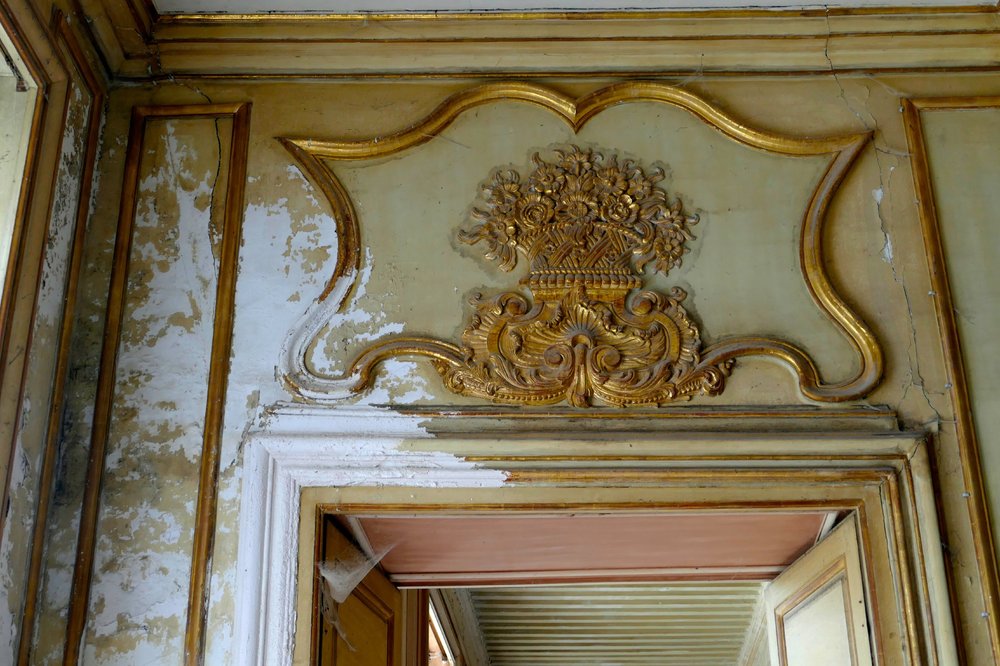
Gilt over a doorway, mid-restoration 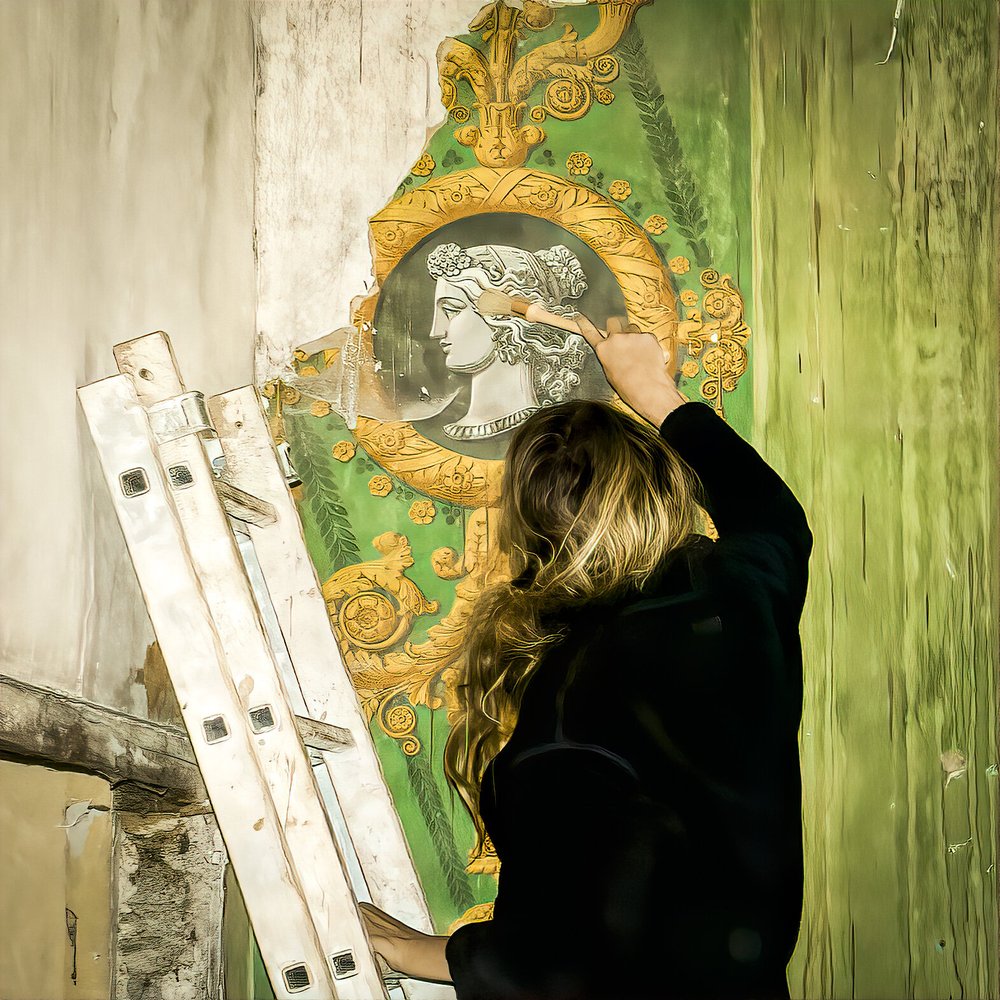
A painted medallion, by hand 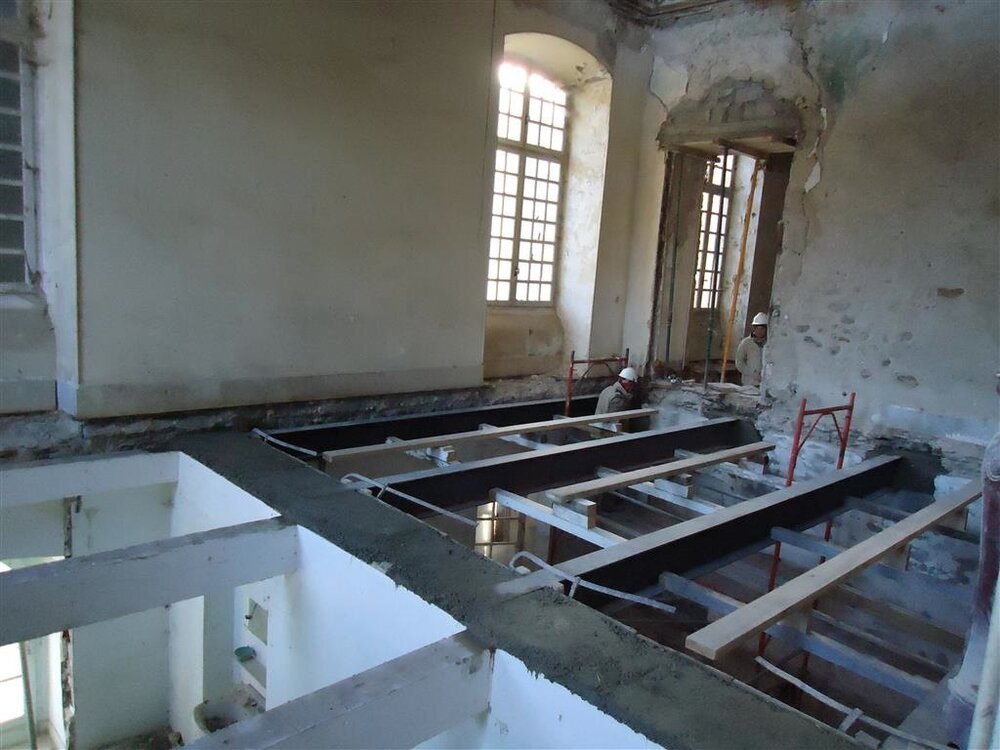
The dining room floor, mid-work 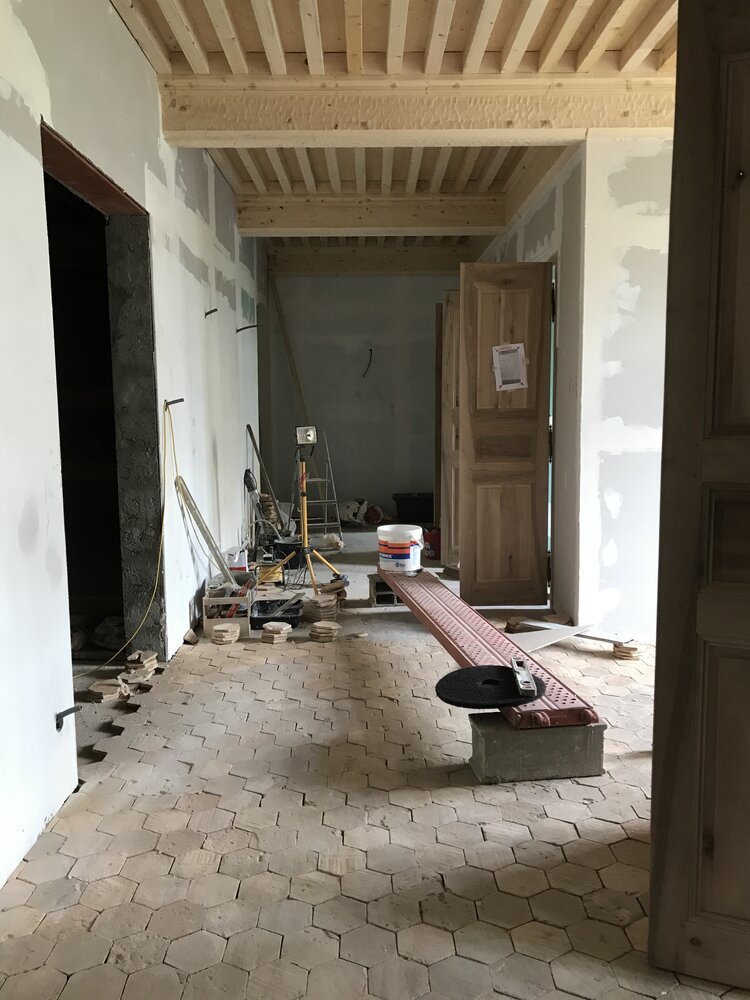
A bathroom, during the work
Les papiers peints The wallpaper
The Wallpaper
Paper on the walls, as it was found and as the rooms are now.
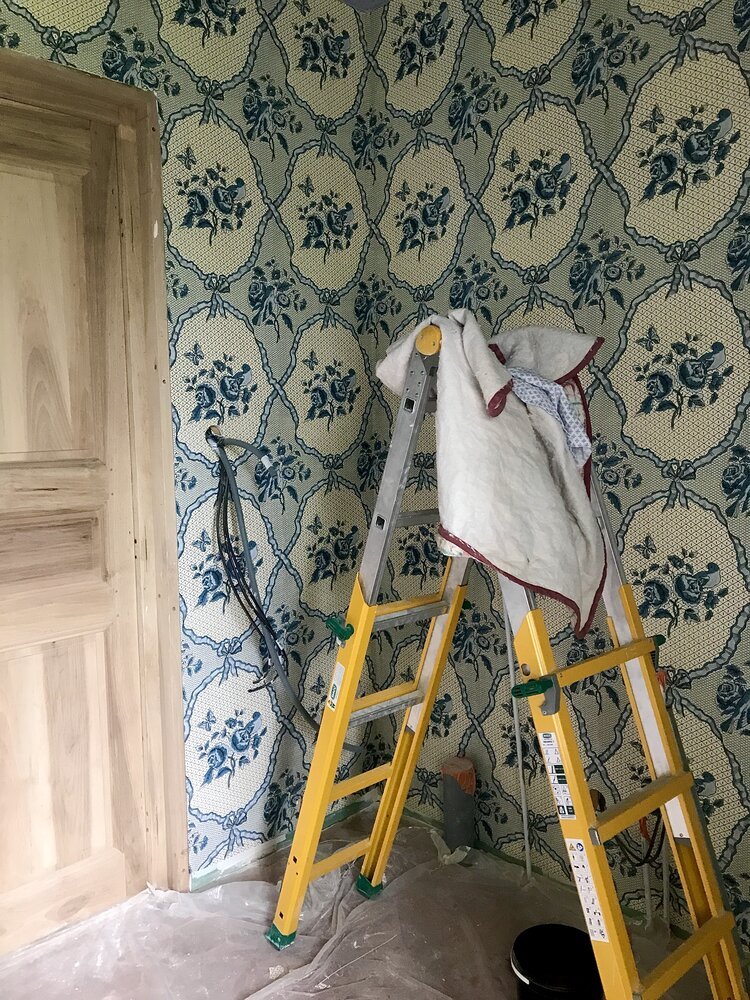
Blue floral paper, during the work 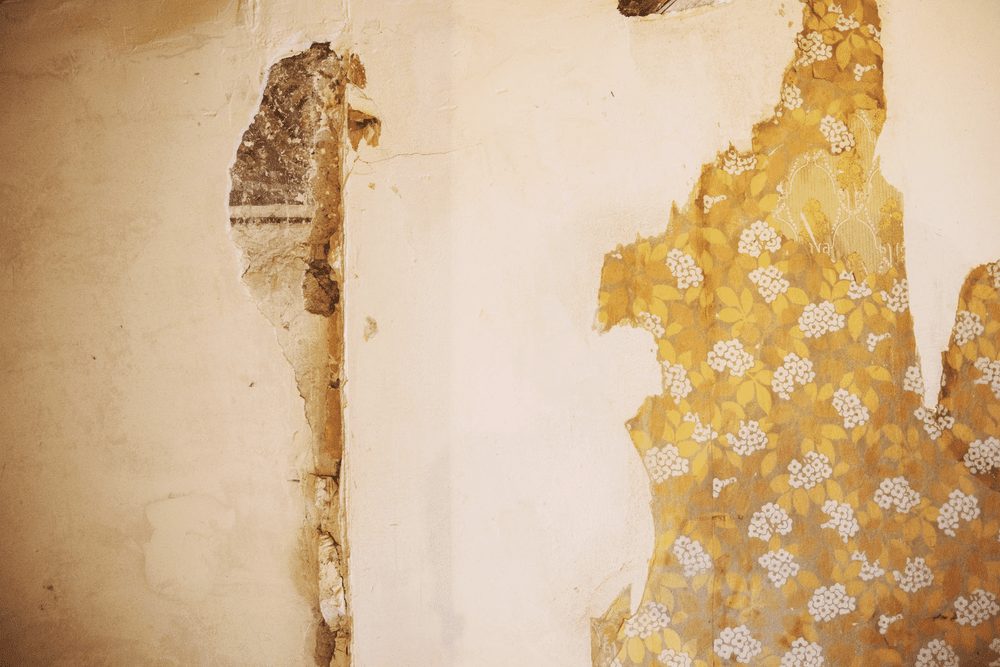
Old paper over bare plaster 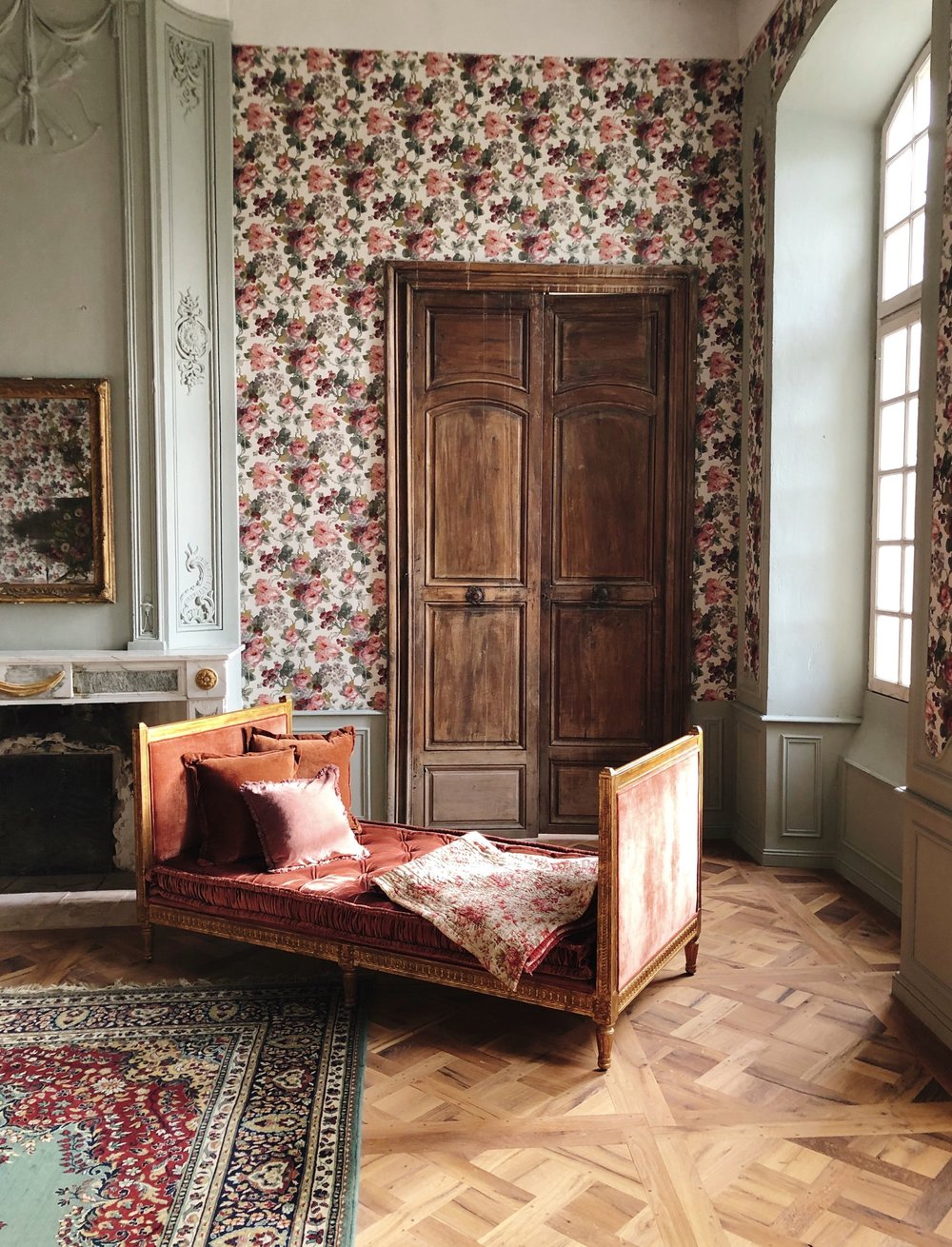
The floral bedroom 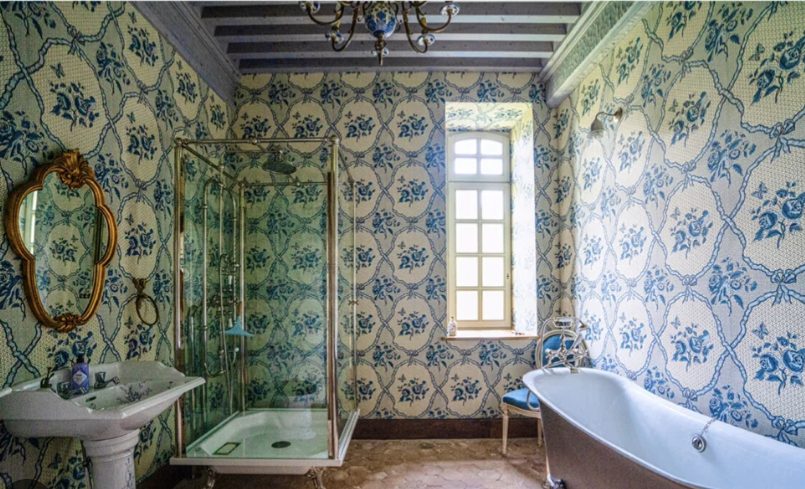
A bathroom papered in blue 
The Family Suite 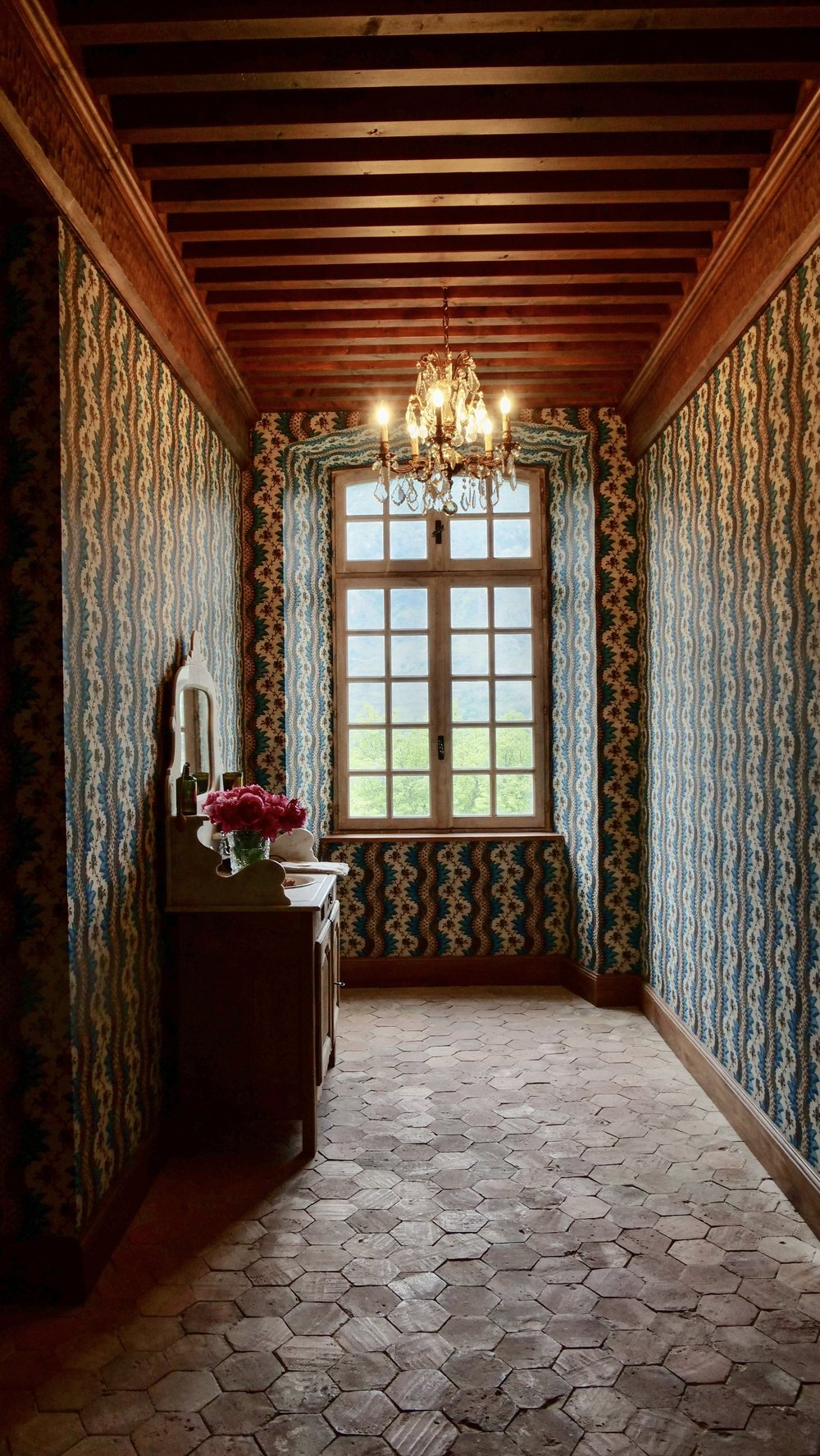
A dressing room, papered again
Monument historique A Historic Monument
French Heritage Law
What a Historic Monument Is
In France, the buildings that matter most to the nation's history and art are protected by law as monuments historiques. The protection goes back to a law of 1913, and it comes at two levels.
Classé · the highest level
For buildings whose preservation is in the public interest, for their history or their art. Only around 15,000 buildings in France are classé. Any work on them needs the state's approval, and is carried out under its scrutiny.
Inscrit · the second level
For buildings of enough interest to be worth preserving. Around 31,000 buildings are inscrit. Work on them must be declared, and the rules are lighter.
Château de Gudanes is classé, and has been a Historic Monument since 1994. In practice, that means:
-
Classé
Class I
The highest protection French law gives a building
-
Autorisé
Approved first
Every intervention authorised in advance by the State's heritage services
-
Les artisans
By artisans
Specialists in the old trades: plaster, joinery, gilding, paint and paper
-
Conservé
Kept, not replaced
Original stone, timber and paper repaired wherever they can be
À l’intérieur Inside
Inside
What You Will See
Rooms in every state: some brought back and lived in, some opened up and left as they were found, some still waiting behind closed doors. Old plaster, painted surfaces coming back to the light, and the work itself, slow and deliberate.
A night here is your room, breakfast and the lounge. The rest of the château, the rooms brought back and the rooms still waiting, is opened to the workshops.
Press & Campaigns
Written About, Filmed In
The restoration has been followed closely for over a decade, in Vogue, AD Italia, the Australian Financial Review and Home Beautiful among others, and the château has been chosen as a setting for campaigns by Zimmermann and Mango Home.
Venir à Gudanes Coming to Gudanes
Stay While It Happens
Five bedrooms are open to guests: bare walls on one side of the door, new floors and beds on the other. The workshops open the rest of the château. Every stay helps the restoration go on.
Monument Historique · Classé A Class I Historic Monument, restored under French heritage law since 2013