
Privacy
What We Do with Your Details
Plainly, and without the usual hedging. We are a family-run château in the Ariège, not an advertising business, and the short version is that we ask for what a stay needs and nothing else.
Last reviewed 13 October 2026. Château de Gudanes, 2 Route de Beille, Château-Verdun, Ariège 09310, France, is the data controller.
What We Hold, and Why
- A room booking
- Your name, email, telephone, dates, how many are coming, and anything you tell us in the notes. We need it to hold the room and to write to you about it — that is the contract between us.
- A table or a workshop
- The same, plus what you cannot eat, and on the longer workshops anything medical we would need to know. That is health information and we treat it as such: it goes to the chef and to whoever is looking after you, and nowhere else.
- Somebody else you ask us to write to
- If you ask us to send the bill to whoever is paying, or to copy an assistant or a member of your family on what we send you, we hold their name and email address for that and for nothing else. They are not added to any list, they are never written to about anything but your booking, and every copy says who asked us to write to them so they can tell us to stop. It goes when the booking record does.
- An event enquiry
- Your name, how to reach you, the dates you have in mind and what you describe. We keep it so we can answer, and so the conversation makes sense if you come back to it months later.
- If you stay and you are not a French national
- Your surname, first names, nationality, date and place of birth, and your home address. This is the fiche individuelle de police, which French law obliges an établissement d'hébergement to keep and to produce if the authorities ask for it. We collect nothing beyond the fields the law lists — no passport number, and no copy of any document — and it is deleted six months after you leave.
- Text messages
- If you leave a mobile number when you book, we may text you about that booking and nothing else — where to collect the key, a change on the day, the things you would want to know while you are travelling and away from a computer. You can stop those at any time by telling us, and we keep the number on a do-not-text list afterwards so that nothing puts you back on it. We will never send you an offer or an invitation by text unless you have separately said yes to that; leaving a number on a booking form is not saying yes, and we do not treat it as though it were. We do not text landlines, and a number we cannot read we simply do not use.
- The newsletter
- Only your email address, and only if you asked for it. Every letter carries an unsubscribe link, and using it stops the letters at once. We keep the address on a do-not-write list afterwards rather than deleting it, because that is the only way to be sure an old list never puts you back on. Ask and we will remove it outright.
We do not buy lists, we do not sell anything to anyone, and we do not build a profile of you.
Paying
Card payments are handled by Stripe. Your card number is typed into Stripe's own form and travels to Stripe, not to us — we never see it and could not store it if we wanted to. What comes back to us is whether the payment succeeded, a reference to look it up by, and the card's brand and last four digits, so your statement can say which card paid. Nothing else about the card is kept.
Cookies, and the Ones We Do Not Set
No other company counts you here. No Google Analytics, no advertising pixel, no session recorder, nothing that follows you to another website. The château counts its own visits, with no cookie and without keeping your internet address — how, and for how long, is under When you visit the website, below. That is not a policy position we are proud of so much as a description of the code — you can look at the page source and see it.
Two cookies exist. One remembers your session while you are booking so the pages join up; the other is a security token that stops a third-party site submitting a form as you. Both are strictly necessary and neither tells anyone anything about you.
Who Else Is Involved
A handful of companies do specific jobs for us. They act on our instructions and may not use your details for their own purposes.
- Stripe
- Takes the payment. Sees your card details; we see only the brand and the last four digits.
- Resend
- Sends our confirmations and letters, so it handles your email address.
- Railway
- Hosts the site and the database it reads from.
- Microsoft
- Hosts our email, and the calendar the people who work here share. That calendar shows who is staying, in which room, how many of you and when — your name, not your email address or telephone, nothing about money, and nothing about your health.
- Anthropic
- When one of us asks for help writing a reply to you, the draft is written by Claude, Anthropic’s model, and Anthropic is sent what the reply needs: your bookings with us, the emails between us, and the notes we keep about you and our conversations with you. Never your card, never your telephone, and nothing about your health — not a dietary note, an access need or a medical note. If you have asked us to stop using your details, it is sent only the email being answered. A person reads every draft and sends it themselves.
Three more are simply files your browser fetches while a page loads, which means those companies can see your IP address: Google Fonts for the typefaces, Squarespace for the photographs, and Frankfurter for the exchange rate behind the currency switcher. None of them receives your name or your booking.
Our accounting system holds supplier invoices and staff expenses. Guest bookings are not sent to it.
How Long We Keep It
- Dietary and medical notes
- A note attached to a booking — a table, a workshop — is deleted once that booking is over. There is no reason to keep it and good reason not to. During service it is shown on a screen in the kitchen, so that the person cooking your food has read it. That screen shows only the people eating here that day, and it cannot be opened without a staff login.
- What you keep on your own record
- If you would rather not write your dietary needs out every time, you can keep them on your own record and we will offer them back. That is kept because you asked: you can change or empty it whenever you like, and it is deleted twelve months after your last stay along with anything we noted about getting around. Nothing medical goes here — that is asked for one workshop and deleted when the workshop is over.
- What you need from the château
- If you tell us something about getting around — that you cannot manage many steps, that you use a stick — we keep it against your name rather than against the one booking, so that you do not have to explain it again the next time. It is deleted twelve months after your last stay. You can ask us to forget it sooner and we will.
- The code or key you were given
- If you arrive late we may send you a door code, and we write down what was given and to whom so that whoever is on the next day can answer the telephone without ringing somebody at home. The code itself is deleted a week after you leave — it is no use to us afterwards and keeping it would be a way into the château. The note that something was issued, and whether a key came back, is kept with the booking.
- A guest list for an event
- If you are marrying here or holding an event, we keep the list of who is coming, where they are sitting, and anything they cannot eat — so that the kitchen can cook for eighty people safely. What somebody cannot eat is deleted once the event is over, along with anything else noted about their health. The names and the seating are kept with the event record.
- What we have written to you
- We keep a copy of the messages we send you — about a stay, a workshop, a table or an event: the confirmation, anything about the bill, the note about your arrival — so that we can answer you if you ring and ask what you were told. Kept for two years after the stay, or two years after we wrote if it was about no stay in particular, then deleted. Anything whose text is itself a key, such as a link to set a password, is never kept at all, and the private link in a letter or a text — to your booking or your account — is taken out of the copy we keep. The texts we send you are kept the same way, for the same two years. We also keep a line for each letter we send — to whom, when, and whether it arrived — for the same two years; for a letter whose text is a key, that line is all we keep. The notes our own inboxes are sent about your booking, such as a payment received, are kept the same way as the letters we write to you. What you write to us from your account page is kept the same way. Your replies to us by email live in our mailbox, not in this system — except what you write to us through Booking.com, below. When one of us opens an email from you, the emails between you and the house are read from our mailboxes and shown beside it; they are held in memory for a few minutes so the page does not ask twice, and are not copied into this system.
- When you visit the website
- We count visits to the website ourselves, with no cookie and no other company involved: the page (for your own booking's pages, only which page it was, never the link itself), the name of the site that sent you (not the address you were on there), a campaign's tags if the link carried them, the kind of device, your browser's language, and whether the visit ended in a booking. Your internet address is not kept with any of it. Each browser is given a code that changes every day, made with a key that is replaced each day and the old one thrown away, so a visit cannot be followed from one day to the next or traced back to you. If your browser asks sites not to track it — Global Privacy Control or Do Not Track — you are not counted at all. Kept for thirteen months, then deleted.
- What changed on your booking
- Each change made to your booking, your payments and your profile — what it was before, what it became, when, and who made it — is written down, so that a mistake can be put right and a question answered. Kept for two years, then deleted. It never records a link or password, your card, or a health or access note. If you ask us to delete your details, you come out of it, and the fact of the change stays.
- When we speak to you
- If you ring us or we speak at the desk, we may write down a line about what was said — so that whoever you speak to next does not start from nothing. Kept for two years, then deleted, like the letters.
- If you booked through Booking.com
- Booking.com emails us your booking — your name, your dates, the room, how many of you and the price — and anything you write to us there, and we keep those emails and what they say about your stay so that we are ready for you and can answer. Kept for two years after the stay, then deleted, like the letters we write to you. A security email from Booking.com, such as a sign-in code, is never kept at all.
- If you open the front door from your phone
- Each time the door is opened from your stay’s page we note when, and for which stay, so that we know you have arrived and can see who came in. Nothing else — not where you were, not your phone. Kept for twelve months, then deleted. The lock itself is run through Tuya, the company behind the Smart Life app, which is sent the request to open the door and nothing about you.
- Booking and payment records
- Kept as long as French accounting law requires us to keep them, which is longer than we would otherwise choose.
- Enquiries that came to nothing
- Deleted twelve months after the date they were about — an event enquiry nobody took up, a waitlist request for dates long past. An enquiry that became a booking is kept as a booking record instead.
- The record that stops the forms being flooded
- Every time anybody sends one of our public forms — a booking request, a newsletter sign-up, a promo code, a look at what is available — we write down the internet address it came from, so that a script cannot fill the calendar with junk and lock real guests out. That entry stops counting after an hour and is deleted after seven days. Nothing is joined to it: it is an address and the name of a form, and it is not looked up against anybody.
- Newsletter
- Until you unsubscribe. The address then stays on a do-not-write list, so that we cannot accidentally add you again — unless you ask us to delete it.
- What you have told us about hearing from us
- Each time you say yes or no — to the newsletter, to other email, to texts, to appearing in our photographs — we note when and how: the link you used, or who wrote down what you told them. That is so that we can show we asked. Kept as long as your details are, and deleted with them if you ask us to.
- Changes to your details
- When your name, address, telephone or preferences change on our records, we note what changed and who changed it, so that a mistake can be put right. For anything about your health — a dietary or access note — we note only that it changed, never what it said. Kept as long as your details are, and deleted with them if you ask us to.
- The police register
- Six months after the stay ends, then deleted. French law requires a guest house to keep a fiche for guests who are not French nationals and to produce it if the authorities ask; six months is how long it must be kept, and we do not keep it longer.
The Link in Your Confirmation
Every booking email carries a link that opens your reservation without a password. It works because the link itself contains a long private code, so treat it the way you would treat a password — anyone holding that link can see and change the booking. Forward it only to someone you would be happy to have do that. Tell us and we will issue a new one.
Photographs
The château photographs itself constantly — the restoration, the table, the workshops — and some of those pictures have guests in them. We ask whether you would rather not appear, and the answer is kept against you rather than against one booking, so it holds for every stay until you change it.
What that answer does: while you are in the château it is shown on the sheet the staff read each morning, and on both of the pages anyone uses to publish a photograph. It is a person who decides, not the software — no program can tell who is in a picture, and one that claimed to would be wrong about somebody. Ask any of us and we will change it, or take something down.
What you can ask us to do
You may ask for a copy of what we hold, ask us to correct it, ask us to delete it, ask us to stop using it, or ask for it in a portable form. From your account page — the link in any letter about your stay — you can take the copy yourself, stop the newsletter, offers and marketing texts, ask us to stop using your details, or ask us to delete them; a deletion is done by a person within a month, and keeps the record of a sale the law requires. If you ask us to stop using your details we keep what we hold, but use it for nothing but your bookings with us: no newsletter, no offers, no invitation to review us, no request for feedback, no greeting on a date that matters — until you tell us otherwise. Where you gave us consent — the newsletter, the medical notes — you may withdraw it at any time, and doing so costs you nothing else.
Write to reservations@chateaugudanes.com and a person at the château will answer. If we handle it badly you can complain to the CNIL, France's data protection authority, at cnil.fr.
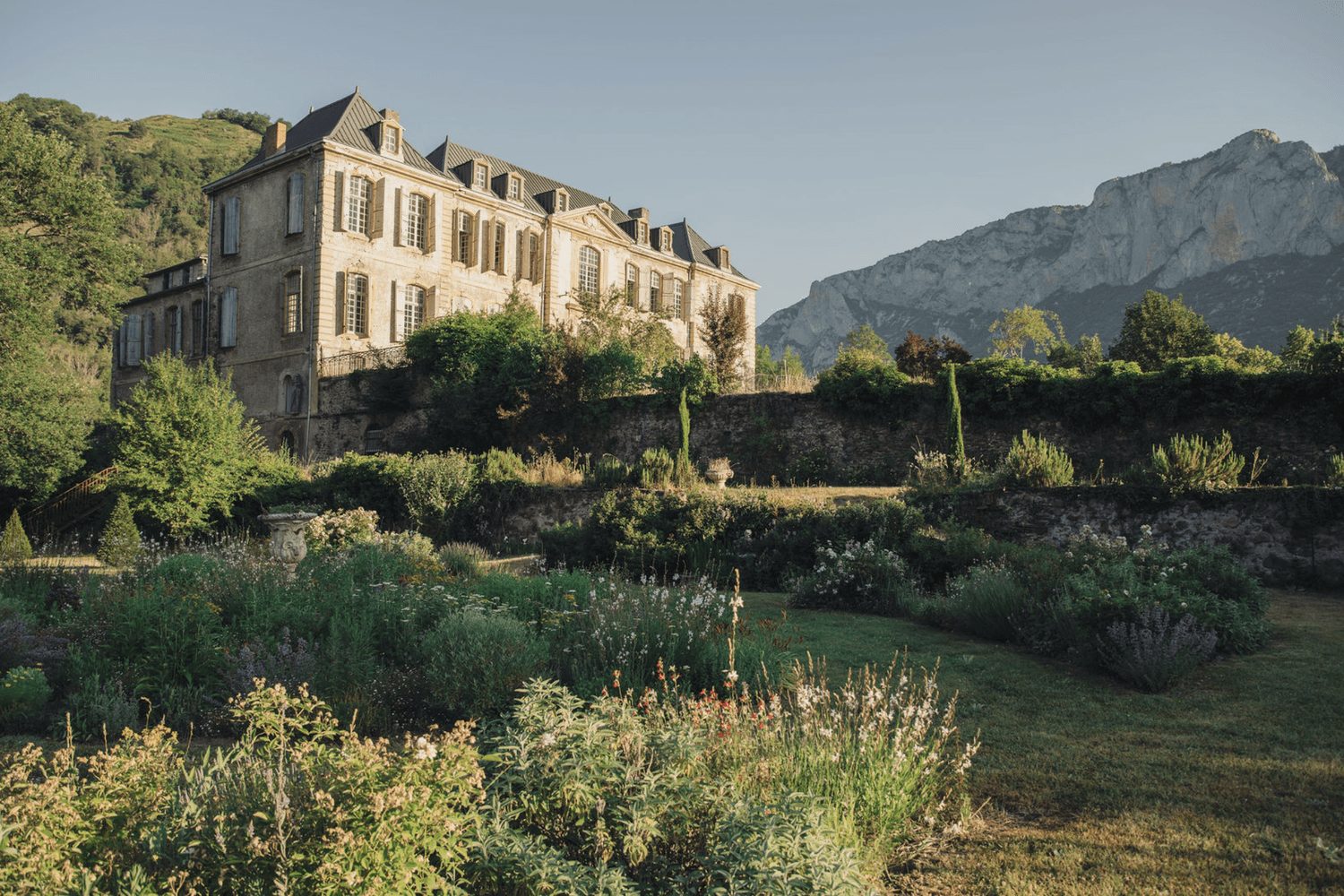
Monument Historique · Classé A Class I Historic Monument, restored under French heritage law since 2013